Milestone Achievement – Forbes India Select 200 DGEMS Recognizes WebDataGuru for Data Intelligence & AI-Driven Price Insights 🎉
Milestone Achievement – Forbes India Select 200 DGEMS Recognizes WebDataGuru for Data Intelligence & AI-Driven Price Insights 🎉
Milestone Achievement – Forbes India Select 200 DGEMS Recognizes WebDataGuru for Data Intelligence & AI-Driven Price Insights 🎉
Milestone Achievement – Forbes India Select 200 DGEMS Recognizes WebDataGuru for Data Intelligence & AI-Driven Price Insights 🎉
Milestone Achievement – Forbes India Select 200 DGEMS Recognizes WebDataGuru for Data Intelligence & AI-Driven Price Insights 🎉
Milestone Achievement – Forbes India Select 200 DGEMS Recognizes WebDataGuru for Data Intelligence & AI-Driven Price Insights 🎉
Milestone Achievement – Forbes India Select 200 DGEMS Recognizes WebDataGuru for Data Intelligence & AI-Driven Price Insights 🎉
Milestone Achievement – Forbes India Select 200 DGEMS Recognizes WebDataGuru for Data Intelligence & AI-Driven Price Insights 🎉
Milestone Achievement – Forbes India Select 200 DGEMS Recognizes WebDataGuru for Data Intelligence & AI-Driven Price Insights 🎉
Milestone Achievement – Forbes India Select 200 DGEMS Recognizes WebDataGuru for Data Intelligence & AI-Driven Price Insights 🎉
Milestone Achievement – Forbes India Select 200 DGEMS Recognizes WebDataGuru for Data Intelligence & AI-Driven Price Insights 🎉
Milestone Achievement – Forbes India Select 200 DGEMS Recognizes WebDataGuru for Data Intelligence & AI-Driven Price Insights 🎉
Milestone Achievement – Forbes India Select 200 DGEMS Recognizes WebDataGuru for Data Intelligence & AI-Driven Price Insights 🎉
Milestone Achievement – Forbes India Select 200 DGEMS Recognizes WebDataGuru for Data Intelligence & AI-Driven Price Insights 🎉
Milestone Achievement – Forbes India Select 200 DGEMS Recognizes WebDataGuru for Data Intelligence & AI-Driven Price Insights 🎉
Milestone Achievement – Forbes India Select 200 DGEMS Recognizes WebDataGuru for Data Intelligence & AI-Driven Price Insights 🎉
Milestone Achievement – Forbes India Select 200 DGEMS Recognizes WebDataGuru for Data Intelligence & AI-Driven Price Insights 🎉
Milestone Achievement – Forbes India Select 200 DGEMS Recognizes WebDataGuru for Data Intelligence & AI-Driven Price Insights 🎉
Milestone Achievement – Forbes India Select 200 DGEMS Recognizes WebDataGuru for Data Intelligence & AI-Driven Price Insights 🎉
Milestone Achievement – Forbes India Select 200 DGEMS Recognizes WebDataGuru for Data Intelligence & AI-Driven Price Insights 🎉
Milestone Achievement – Forbes India Select 200 DGEMS Recognizes WebDataGuru for Data Intelligence & AI-Driven Price Insights 🎉
Milestone Achievement – Forbes India Select 200 DGEMS Recognizes WebDataGuru for Data Intelligence & AI-Driven Price Insights 🎉
Milestone Achievement – Forbes India Select 200 DGEMS Recognizes WebDataGuru for Data Intelligence & AI-Driven Price Insights 🎉
Milestone Achievement – Forbes India Select 200 DGEMS Recognizes WebDataGuru for Data Intelligence & AI-Driven Price Insights 🎉
Milestone Achievement – Forbes India Select 200 DGEMS Recognizes WebDataGuru for Data Intelligence & AI-Driven Price Insights 🎉
Milestone Achievement – Forbes India Select 200 DGEMS Recognizes WebDataGuru for Data Intelligence & AI-Driven Price Insights 🎉
Milestone Achievement – Forbes India Select 200 DGEMS Recognizes WebDataGuru for Data Intelligence & AI-Driven Price Insights 🎉
Milestone Achievement – Forbes India Select 200 DGEMS Recognizes WebDataGuru for Data Intelligence & AI-Driven Price Insights 🎉
Milestone Achievement – Forbes India Select 200 DGEMS Recognizes WebDataGuru for Data Intelligence & AI-Driven Price Insights 🎉
Milestone Achievement – Forbes India Select 200 DGEMS Recognizes WebDataGuru for Data Intelligence & AI-Driven Price Insights 🎉
Milestone Achievement – Forbes India Select 200 DGEMS Recognizes WebDataGuru for Data Intelligence & AI-Driven Price Insights 🎉
Milestone Achievement – Forbes India Select 200 DGEMS Recognizes WebDataGuru for Data Intelligence & AI-Driven Price Insights 🎉
Milestone Achievement – Forbes India Select 200 DGEMS Recognizes WebDataGuru for Data Intelligence & AI-Driven Price Insights 🎉
Milestone Achievement – Forbes India Select 200 DGEMS Recognizes WebDataGuru for Data Intelligence & AI-Driven Price Insights 🎉
Milestone Achievement – Forbes India Select 200 DGEMS Recognizes WebDataGuru for Data Intelligence & AI-Driven Price Insights 🎉
Milestone Achievement – Forbes India Select 200 DGEMS Recognizes WebDataGuru for Data Intelligence & AI-Driven Price Insights 🎉
Milestone Achievement – Forbes India Select 200 DGEMS Recognizes WebDataGuru for Data Intelligence & AI-Driven Price Insights 🎉
Milestone Achievement – Forbes India Select 200 DGEMS Recognizes WebDataGuru for Data Intelligence & AI-Driven Price Insights 🎉
Milestone Achievement – Forbes India Select 200 DGEMS Recognizes WebDataGuru for Data Intelligence & AI-Driven Price Insights 🎉
Milestone Achievement – Forbes India Select 200 DGEMS Recognizes WebDataGuru for Data Intelligence & AI-Driven Price Insights 🎉
Milestone Achievement – Forbes India Select 200 DGEMS Recognizes WebDataGuru for Data Intelligence & AI-Driven Price Insights 🎉
Milestone Achievement – Forbes India Select 200 DGEMS Recognizes WebDataGuru for Data Intelligence & AI-Driven Price Insights 🎉
Milestone Achievement – Forbes India Select 200 DGEMS Recognizes WebDataGuru for Data Intelligence & AI-Driven Price Insights 🎉
Milestone Achievement – Forbes India Select 200 DGEMS Recognizes WebDataGuru for Data Intelligence & AI-Driven Price Insights 🎉
Milestone Achievement – Forbes India Select 200 DGEMS Recognizes WebDataGuru for Data Intelligence & AI-Driven Price Insights 🎉
Milestone Achievement – Forbes India Select 200 DGEMS Recognizes WebDataGuru for Data Intelligence & AI-Driven Price Insights 🎉
Milestone Achievement – Forbes India Select 200 DGEMS Recognizes WebDataGuru for Data Intelligence & AI-Driven Price Insights 🎉
Milestone Achievement – Forbes India Select 200 DGEMS Recognizes WebDataGuru for Data Intelligence & AI-Driven Price Insights 🎉
Milestone Achievement – Forbes India Select 200 DGEMS Recognizes WebDataGuru for Data Intelligence & AI-Driven Price Insights 🎉
Milestone Achievement – Forbes India Select 200 DGEMS Recognizes WebDataGuru for Data Intelligence & AI-Driven Price Insights 🎉
Milestone Achievement – Forbes India Select 200 DGEMS Recognizes WebDataGuru for Data Intelligence & AI-Driven Price Insights 🎉
Milestone Achievement – Forbes India Select 200 DGEMS Recognizes WebDataGuru for Data Intelligence & AI-Driven Price Insights 🎉
Milestone Achievement – Forbes India Select 200 DGEMS Recognizes WebDataGuru for Data Intelligence & AI-Driven Price Insights 🎉
Milestone Achievement – Forbes India Select 200 DGEMS Recognizes WebDataGuru for Data Intelligence & AI-Driven Price Insights 🎉
Milestone Achievement – Forbes India Select 200 DGEMS Recognizes WebDataGuru for Data Intelligence & AI-Driven Price Insights 🎉
Milestone Achievement – Forbes India Select 200 DGEMS Recognizes WebDataGuru for Data Intelligence & AI-Driven Price Insights 🎉
Milestone Achievement – Forbes India Select 200 DGEMS Recognizes WebDataGuru for Data Intelligence & AI-Driven Price Insights 🎉
Milestone Achievement – Forbes India Select 200 DGEMS Recognizes WebDataGuru for Data Intelligence & AI-Driven Price Insights 🎉
Milestone Achievement – Forbes India Select 200 DGEMS Recognizes WebDataGuru for Data Intelligence & AI-Driven Price Insights 🎉
Milestone Achievement – Forbes India Select 200 DGEMS Recognizes WebDataGuru for Data Intelligence & AI-Driven Price Insights 🎉
Milestone Achievement – Forbes India Select 200 DGEMS Recognizes WebDataGuru for Data Intelligence & AI-Driven Price Insights 🎉
Milestone Achievement – Forbes India Select 200 DGEMS Recognizes WebDataGuru for Data Intelligence & AI-Driven Price Insights 🎉
Milestone Achievement – Forbes India Select 200 DGEMS Recognizes WebDataGuru for Data Intelligence & AI-Driven Price Insights 🎉
Milestone Achievement – Forbes India Select 200 DGEMS Recognizes WebDataGuru for Data Intelligence & AI-Driven Price Insights 🎉
Milestone Achievement – Forbes India Select 200 DGEMS Recognizes WebDataGuru for Data Intelligence & AI-Driven Price Insights 🎉
Milestone Achievement – Forbes India Select 200 DGEMS Recognizes WebDataGuru for Data Intelligence & AI-Driven Price Insights 🎉
8 Best Competera Alternatives & Competitors
Competera is a well-known AI pricing optimization platform, but it isn't the right fit for every business. It's built for large enterprise retailers with big teams, deep transaction history, and enterprise-level budgets. The platform uses machine learning models to recommend prices based on demand elasticity, competitor positioning, and customer behavior going beyond simple price tracking into full pricing strategy automation.
That depth is exactly why many businesses start looking elsewhere. If you're a mid-market retailer, growing eCommerce brand, manufacturer, or marketplace seller, you likely don't need 900+ deep learning models trained in years of transaction history. What you need is something faster to set up, easier for a small team to run day-to-day, and priced for your actual scale not a months-long enterprise rollout.
Below, we've rounded up the 8 best Competera alternatives and competitors, so you can pick up the platform that matches your catalog's size, budget, and pricing goals.
Why Look for a Competera Alternative?
Competera positions itself as a price optimization platform, not just a plain monitoring tool. It says it uses machine learning models reportedly hundreds of them to recommend prices off demand elasticity, customer behavior, and competitor data. Sounds good on paper, but when you get down to it there are some real tradeoffs too:
No public pricing. You won't find a pricing page. Everything goes through a sales call and a custom quote, which usually means an enterprise-level budget.
Long onboarding. Competera follows a proof-of-concept implementation model. Getting signup to usable recommendations can take weeks or months, not days.
Built for large catalogs with historical data. The AI models need a lot of transaction history to work well. If you're a newer brand, entering a new market, or running a smaller catalog, the models have less to work with.
Monitoring is secondary, not the core product. If what you actually need is reliable, fast competitor price data is not a full pricing optimization engine you may be paying far more complexity than you need.
Most businesses searching for Competera alternatives & competitors aren't looking for a worse version of Competera. They're looking for a tool that's better matched to their size: faster to launch, easier for a small team to run day-to-day, and priced in a way that doesn't require a six-figure commitment before you've seen results.
8 Best Competera Alternatives & Competitors
1. PriceIntelGuru - Best Overall AI-Powered Price Intelligence Platform
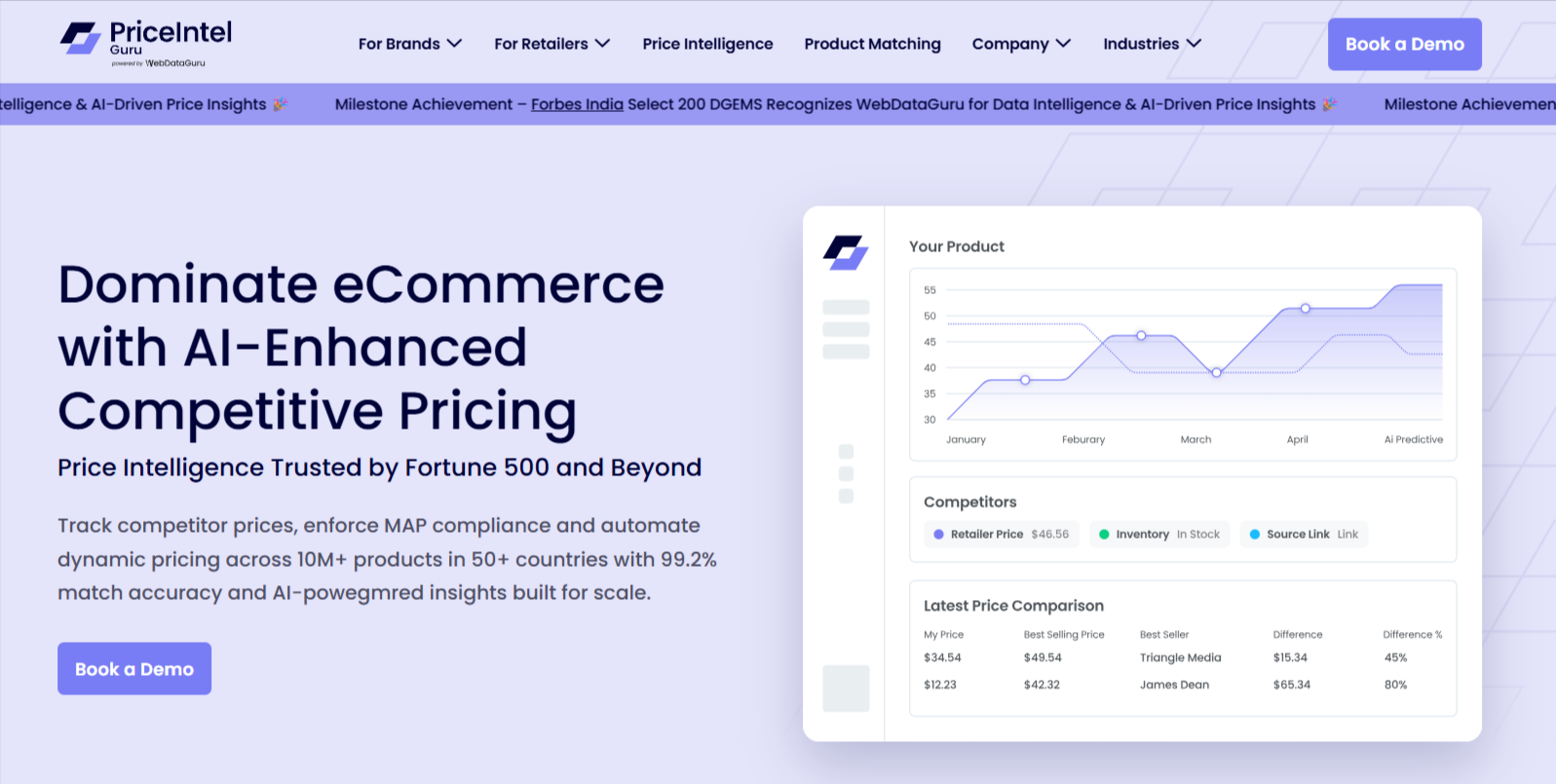
PriceIntelGuru, a flagship platform by WebDataGuru, is built for retailers, eCommerce brands, manufacturers, distributors, marketplace sellers, and pricing teams. It reduces reliance on manual tracking and spreadsheets, helping businesses protect margins, stay agile, and make faster, data-backed decisions.
Key features:
Competitor price monitoring across 10M+ products in 50+ countries
99.2% AI-driven product matching accuracy
Marketplace price monitoring (Amazon, Walmart, eBay, and more)
MAP violation detection and brand compliance monitoring
Stock and inventory availability tracking
Dynamic pricing software and automated repricing rules
Product matching and comparison across matched competitor items
Centralized, easy-to-use dashboard for pricing decisions
Flexible delivery: SaaS dashboard, Data-as-a-Service, or API
Best for: Small, medium and large Retailers, eCommerce brands, manufacturers, distributors, and marketplace sellers who want price intelligence without complexity or cost. PriceIntelGuru replaces manual SKU tracking and spreadsheets with one dashboard that protects margins and speeds up pricing decisions.
2. Prisync
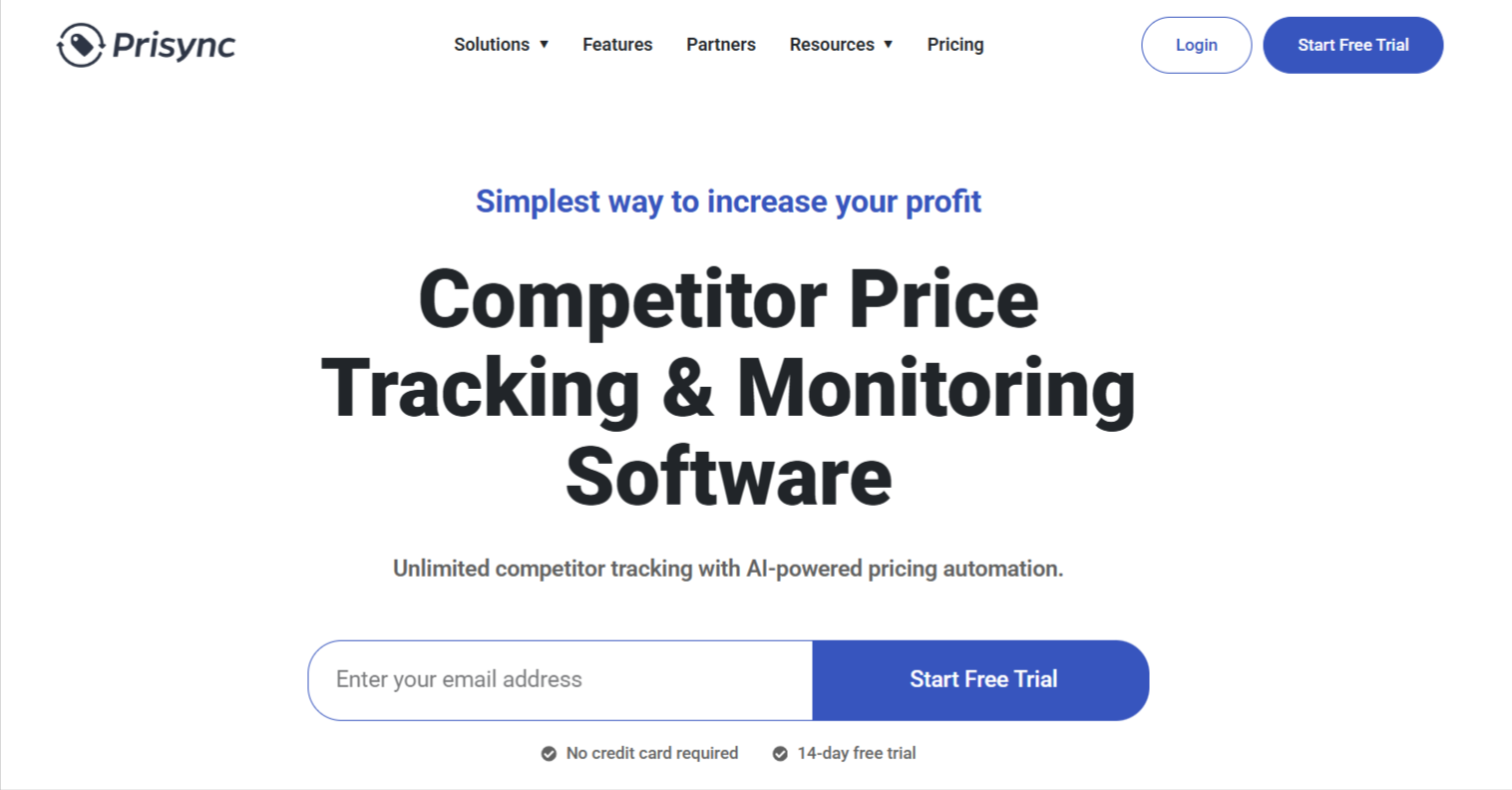
Prisync is one of the most popular self-serve competitor price trackers on the market. It's built for small and mid-sized online stores that want straightforward competitor monitoring without enterprise overhead.
Best for: Solo founders and small teams tracking a handful of competitors who want a clean dashboard and fast onboarding.
Limitation: Coverage on regional or custom storefronts can be inconsistent, and there's no AI-driven demand modeling.
3. Price2Spy
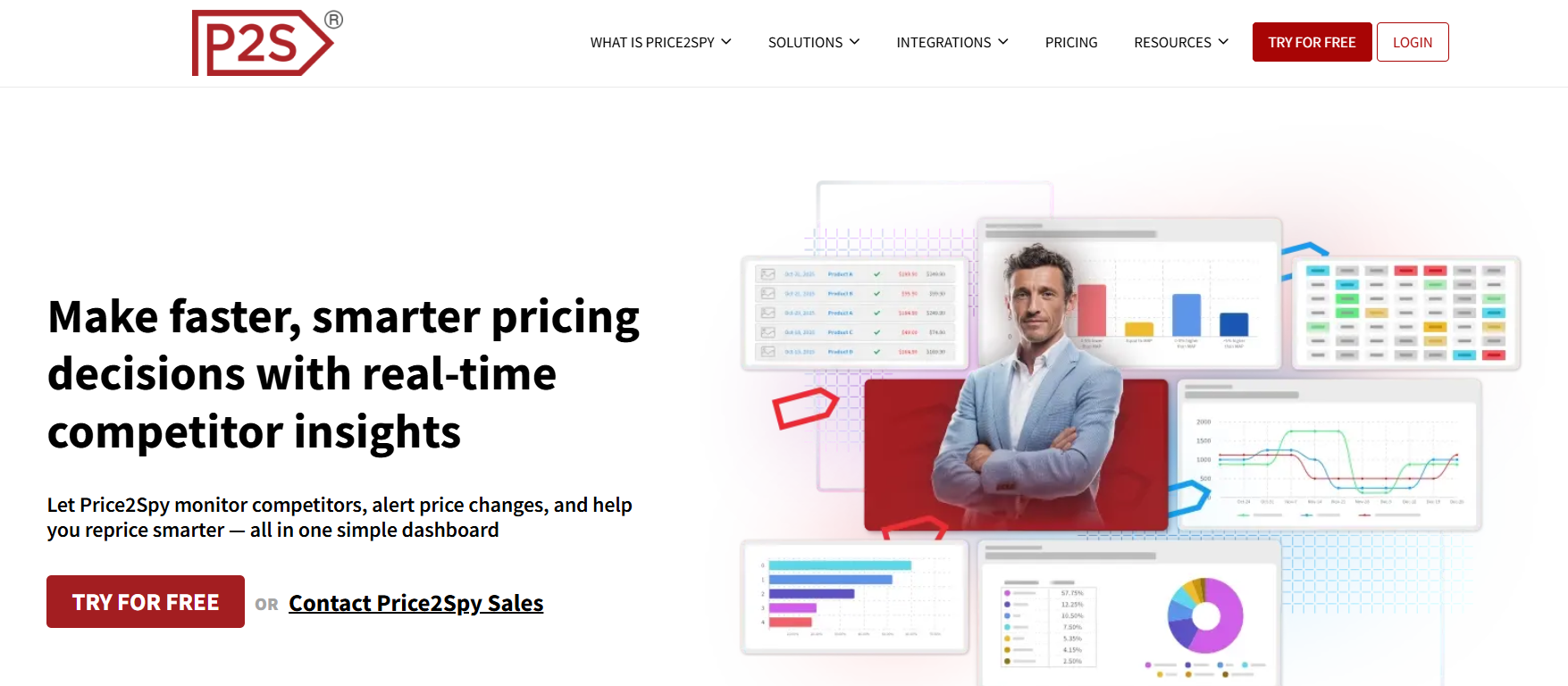
Price2Spy uses browser-based scraping, which helps it handle sites that block standard scrapers useful if you're tracking complex or regional retailer websites.
Key features: Daily competitor price monitoring, price change alerts, rules-based repricing integrations, support for 450+ pre-supported ecommerce sites.
Best for: Budget-conscious teams and businesses monitoring European or regional marketplaces.
Limitation: Daily refresh cycles aren't ideal for fast-moving categories like electronics or fashion, where prices can shift several times a day.
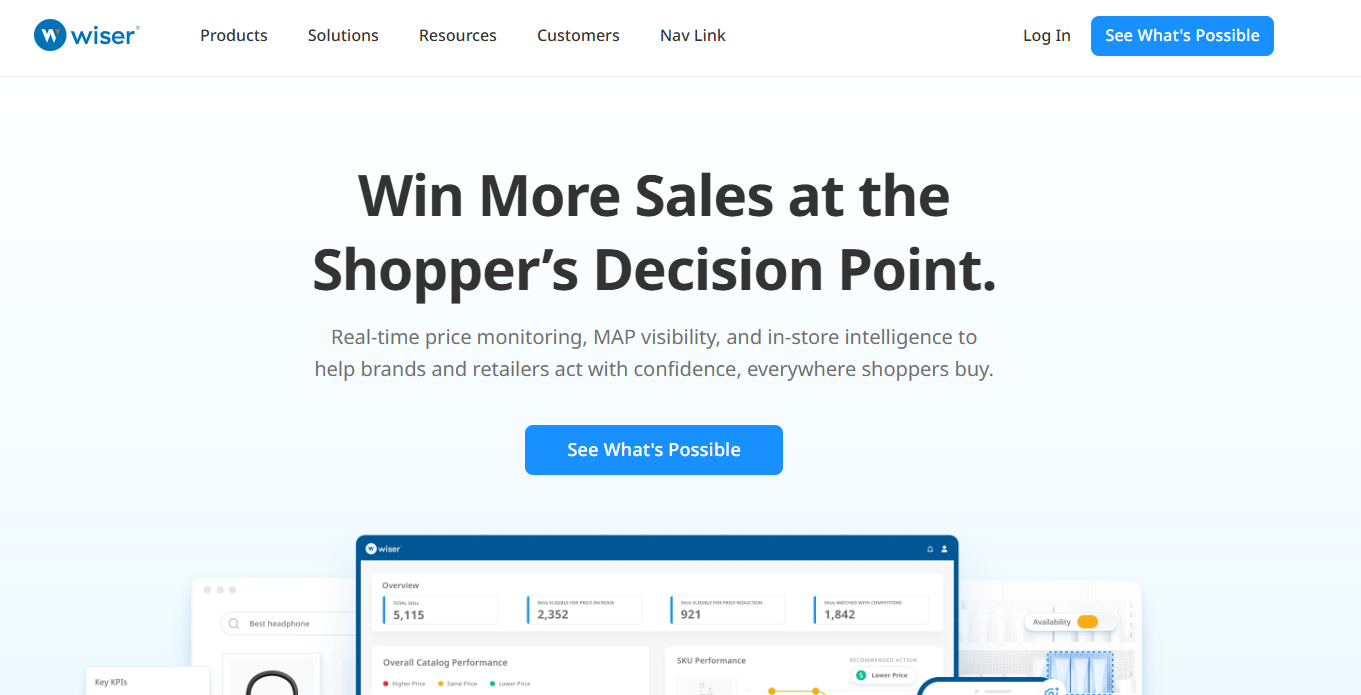
4. Wiser
Wiser is sort of built for those large retailers who want real depth and also the kind of scale that’s hard to fake. There’s a huge product data bank and regular price updates across the big marketplaces.
Key features: Price intelligence, shelf analytics, MAP monitoring, and then repricing strategies plus dedicated account management.
Best for: enterprise retail teams with thousands of SKUs spread over multiple countries, and the budget to go with that.
Limitation: like Competera, the pricing is custom, negotiated, and the platform feels sized for businesses way past mid-market scale.
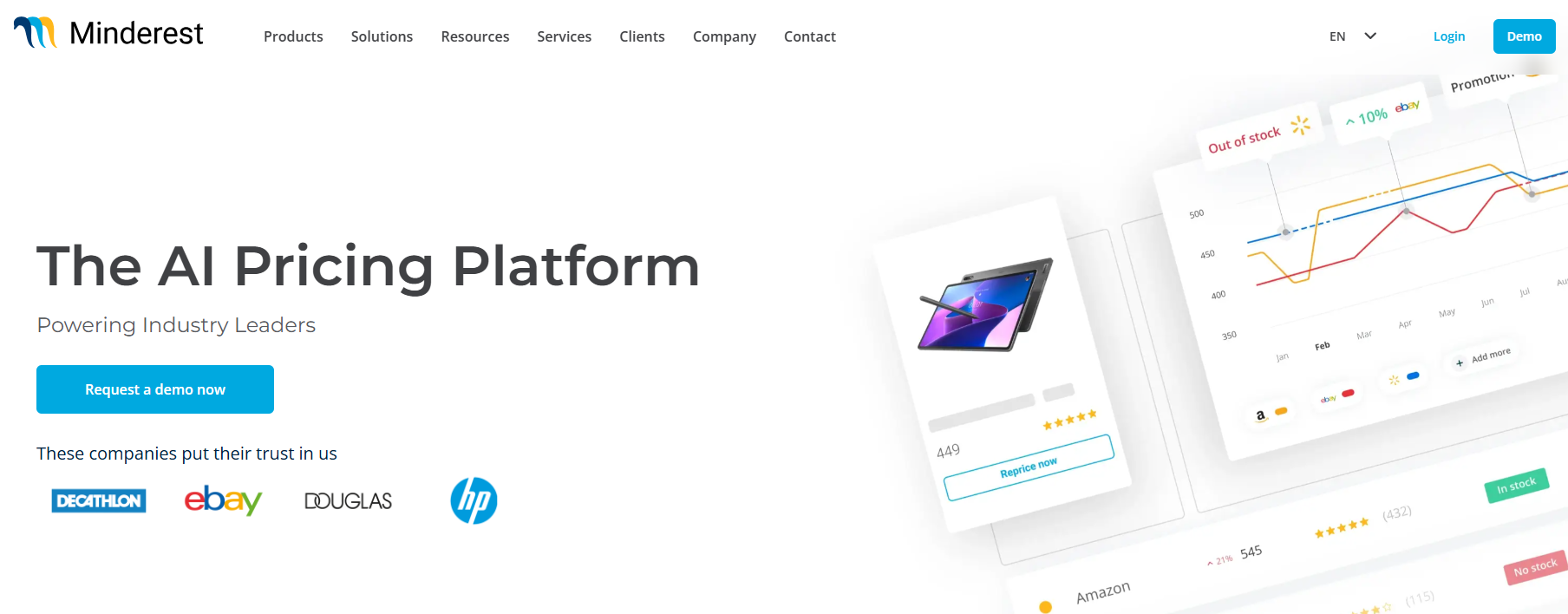
5. Minderest
Minderest splits up its offering in a simple way, with tools for retailers and tools for brands,so it can be a flexible competitive pricing software option, depending on which side of the market you are.
Key features: Competitor price tracking, AI based dynamic pricing recommendations, MAP and MSRP compliance monitoring, distribution channel analysis.
Best for: Brands and manufacturers who need to guard minimum advertised pricing across a reseller network, plus retailers who want a repricing engine that can help day to day.
6. Intelligence Node
Intelligence Node organizes its platform around three pillars: brand intelligence, retailer intelligence, and data intelligence, giving it a slightly different angle than pure price monitoring software.
Key features: Assortment planning, competitive benchmarking, digital shelf analytics, product matching, inventory and promotions visibility.
Best for: Mid-to-large retailers who want pricing data combined with assortment and merchandising insight into one tool.
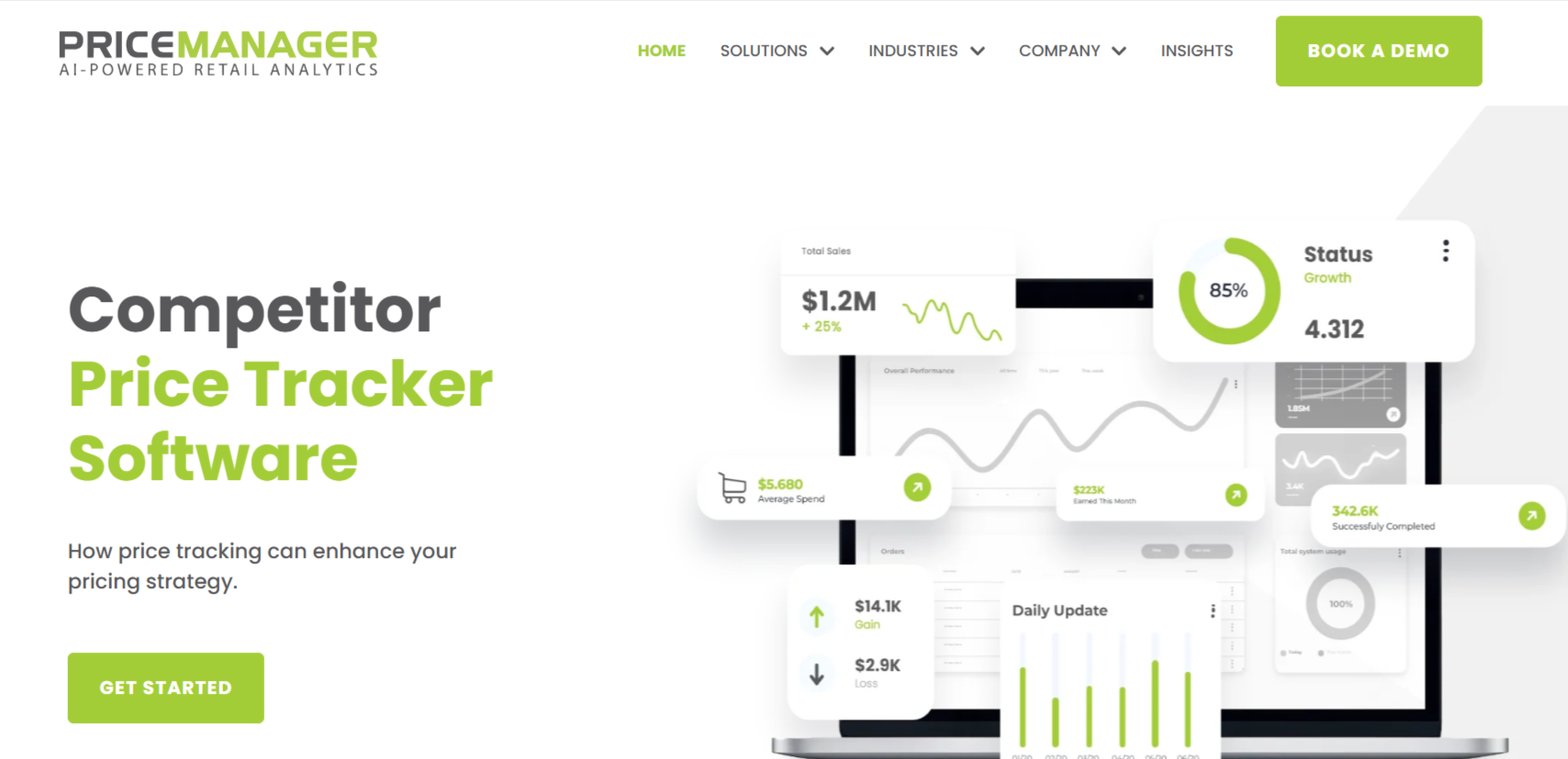
7. PriceManager
PriceManager focuses on practical tools for distributors, retailers, and manufacturers who need to monitor pricing and protect margins without a complicated setup.
Best for: Manufacturers and distributors that need straightforward MAP protection alongside competitor tracking.
8. ScrapeWise
ScrapeWise takes a different approach than most tools on this list. Instead of a fixed dashboard with a pre-built site database, it's a managed data layer: you tell it what to track, and it delivers structured pricing data through an API, including custom or regional URLs that other tools may not support.
Key features: Real-time competitor price tracking via API, custom URL coverage on any publicly accessible page, usage-based pricing instead of per-SKU fees, high uptime reliability.
Best for: Pricing teams that want to pipe raw competitor data directly into their own repricing engine or BI stack, and retailers track niche or regional suppliers not covered by standard tools.
Limitation: It's infrastructure, not a finished pricing dashboard; you'll likely pair it with a separate tool for analysis or automation.
Competera Alternatives Comparison Table
Tool
Best For
Pricing Model
AI/Automation
PriceIntelGuru
Overall price intelligence, Fast Setup, Competitive monitoring
Flexible (SaaS, DaaS, API)
AI product matching, dynamic pricing
Prisync
Small teams, fast setup
Published monthly plans
Rule-based suggestions
Price2Spy
Budget monitoring
Published monthly plans
Rule-based repricing
Wiser
Enterprise catalog depth
Custom/contact sales
AI-assisted repricing
Minderest
MAP/MSRP compliance
Custom/contact sales
AI dynamic pricing
Intelligence Node
Brand + retail intelligence
Custom/contact sales
Digital shelf analytics
PriceManager
Distributors & manufacturers
Custom/contact sales
Elasticity-based pricing
ScrapeWise
Custom API data feeds
Usage-based
Real-time data delivery
Competera vs. Alternatives: Monitoring vs. Optimization
The most useful way to frame this decision isn't "which tool is cheaper" it's "what problem am I actually solving?"
Choose a monitoring-first tool (like PriceIntelGuru, Prisync, or Price2Spy) if:
You want to know what competitors are charging, updated frequently
You're making pricing decisions manually or through your own rules
You need MAP compliance, marketplace coverage, or stock visibility
You want to be live in days, not months
Choose an enterprise optimization platform (like Competera or Wiser) if:
You have a dedicated pricing analyst team to act on AI recommendations
You have years of transaction history to train demand models
You're comfortable with a custom enterprise contract and a multi-week rollout
Most mid-market retailers and growing eCommerce brands fall into the first category. They need accurate, fast competitor price tracker data more than they need a full pricing optimization engine, and that's exactly the gap platforms like PriceIntelGuru are built to fill.
Final Thoughts
Competera is a capable platform for large enterprises with the budget, data, and team to support a full AI pricing optimization rollout. But for most retailers, brands, manufacturers, and marketplace sellers, the real need is simpler: accurate competitor price tracking, MAP monitoring, and dynamic pricing automation that's easy to set up and doesn't require a six-figure commitment. This is where PriceIntelGuru fits in, giving teams the accuracy and automation they need without the complexity or cost of an enterprise-only rollout.
Frequently Asked Questions
1. What is the best Competera alternative?
PriceIntelGuru is a strong overall alternative for businesses that need AI-powered price intelligence, marketplace monitoring, and MAP compliance without a sales cycle. For smaller teams, Prisync and Price2Spy offer simpler, faster self-serve setups.
2. Why do businesses look for Competera alternatives?
The most common reasons are pricing transparency, faster onboarding, and a better fit for smaller catalogs. Competera's enterprise model and lack of public pricing make it a heavy commitment for mid-market retailers who
mainly need reliable competitor price data.
3. Is there a free Competera alternative?
Most platforms on this list, including PriceIntelGuru, offer a free demo or trial rather than a fully free plan, since accurate price intelligence relies on ongoing data collection and product matching infrastructure.
4. What's the difference between price monitoring and price optimization?
Price monitoring tells you what your competitors are charging. Price optimization (Competera's core focus) tells you what you should charge based on demand modeling. Most businesses actually need the former, paired with automation to act on it which is what platforms like PriceIntelGuru deliver.
5. Does PriceIntelGuru support MAP monitoring?
Yes. PriceIntelGuru includes MAP violation detection alongside competitor price monitoring, marketplace tracking, and AI-driven product matching, making it useful for both retailers and brands protecting reseller pricing.
Transform Your Pricing Strategy Today
Thank you! Your submission has been received!
Oops! Something went wrong while submitting the form.