Milestone Achievement – Forbes India Select 200 DGEMS Recognizes WebDataGuru for Data Intelligence & AI-Driven Price Insights 🎉
Milestone Achievement – Forbes India Select 200 DGEMS Recognizes WebDataGuru for Data Intelligence & AI-Driven Price Insights 🎉
Milestone Achievement – Forbes India Select 200 DGEMS Recognizes WebDataGuru for Data Intelligence & AI-Driven Price Insights 🎉
Milestone Achievement – Forbes India Select 200 DGEMS Recognizes WebDataGuru for Data Intelligence & AI-Driven Price Insights 🎉
Milestone Achievement – Forbes India Select 200 DGEMS Recognizes WebDataGuru for Data Intelligence & AI-Driven Price Insights 🎉
Milestone Achievement – Forbes India Select 200 DGEMS Recognizes WebDataGuru for Data Intelligence & AI-Driven Price Insights 🎉
Milestone Achievement – Forbes India Select 200 DGEMS Recognizes WebDataGuru for Data Intelligence & AI-Driven Price Insights 🎉
Milestone Achievement – Forbes India Select 200 DGEMS Recognizes WebDataGuru for Data Intelligence & AI-Driven Price Insights 🎉
Milestone Achievement – Forbes India Select 200 DGEMS Recognizes WebDataGuru for Data Intelligence & AI-Driven Price Insights 🎉
Milestone Achievement – Forbes India Select 200 DGEMS Recognizes WebDataGuru for Data Intelligence & AI-Driven Price Insights 🎉
Milestone Achievement – Forbes India Select 200 DGEMS Recognizes WebDataGuru for Data Intelligence & AI-Driven Price Insights 🎉
Milestone Achievement – Forbes India Select 200 DGEMS Recognizes WebDataGuru for Data Intelligence & AI-Driven Price Insights 🎉
Milestone Achievement – Forbes India Select 200 DGEMS Recognizes WebDataGuru for Data Intelligence & AI-Driven Price Insights 🎉
Milestone Achievement – Forbes India Select 200 DGEMS Recognizes WebDataGuru for Data Intelligence & AI-Driven Price Insights 🎉
Milestone Achievement – Forbes India Select 200 DGEMS Recognizes WebDataGuru for Data Intelligence & AI-Driven Price Insights 🎉
Milestone Achievement – Forbes India Select 200 DGEMS Recognizes WebDataGuru for Data Intelligence & AI-Driven Price Insights 🎉
Milestone Achievement – Forbes India Select 200 DGEMS Recognizes WebDataGuru for Data Intelligence & AI-Driven Price Insights 🎉
Milestone Achievement – Forbes India Select 200 DGEMS Recognizes WebDataGuru for Data Intelligence & AI-Driven Price Insights 🎉
Milestone Achievement – Forbes India Select 200 DGEMS Recognizes WebDataGuru for Data Intelligence & AI-Driven Price Insights 🎉
Milestone Achievement – Forbes India Select 200 DGEMS Recognizes WebDataGuru for Data Intelligence & AI-Driven Price Insights 🎉
Milestone Achievement – Forbes India Select 200 DGEMS Recognizes WebDataGuru for Data Intelligence & AI-Driven Price Insights 🎉
Milestone Achievement – Forbes India Select 200 DGEMS Recognizes WebDataGuru for Data Intelligence & AI-Driven Price Insights 🎉
Milestone Achievement – Forbes India Select 200 DGEMS Recognizes WebDataGuru for Data Intelligence & AI-Driven Price Insights 🎉
Milestone Achievement – Forbes India Select 200 DGEMS Recognizes WebDataGuru for Data Intelligence & AI-Driven Price Insights 🎉
Milestone Achievement – Forbes India Select 200 DGEMS Recognizes WebDataGuru for Data Intelligence & AI-Driven Price Insights 🎉
Milestone Achievement – Forbes India Select 200 DGEMS Recognizes WebDataGuru for Data Intelligence & AI-Driven Price Insights 🎉
Milestone Achievement – Forbes India Select 200 DGEMS Recognizes WebDataGuru for Data Intelligence & AI-Driven Price Insights 🎉
Milestone Achievement – Forbes India Select 200 DGEMS Recognizes WebDataGuru for Data Intelligence & AI-Driven Price Insights 🎉
Milestone Achievement – Forbes India Select 200 DGEMS Recognizes WebDataGuru for Data Intelligence & AI-Driven Price Insights 🎉
Milestone Achievement – Forbes India Select 200 DGEMS Recognizes WebDataGuru for Data Intelligence & AI-Driven Price Insights 🎉
Milestone Achievement – Forbes India Select 200 DGEMS Recognizes WebDataGuru for Data Intelligence & AI-Driven Price Insights 🎉
Milestone Achievement – Forbes India Select 200 DGEMS Recognizes WebDataGuru for Data Intelligence & AI-Driven Price Insights 🎉
Milestone Achievement – Forbes India Select 200 DGEMS Recognizes WebDataGuru for Data Intelligence & AI-Driven Price Insights 🎉
Milestone Achievement – Forbes India Select 200 DGEMS Recognizes WebDataGuru for Data Intelligence & AI-Driven Price Insights 🎉
Milestone Achievement – Forbes India Select 200 DGEMS Recognizes WebDataGuru for Data Intelligence & AI-Driven Price Insights 🎉
Milestone Achievement – Forbes India Select 200 DGEMS Recognizes WebDataGuru for Data Intelligence & AI-Driven Price Insights 🎉
Milestone Achievement – Forbes India Select 200 DGEMS Recognizes WebDataGuru for Data Intelligence & AI-Driven Price Insights 🎉
Milestone Achievement – Forbes India Select 200 DGEMS Recognizes WebDataGuru for Data Intelligence & AI-Driven Price Insights 🎉
Milestone Achievement – Forbes India Select 200 DGEMS Recognizes WebDataGuru for Data Intelligence & AI-Driven Price Insights 🎉
Milestone Achievement – Forbes India Select 200 DGEMS Recognizes WebDataGuru for Data Intelligence & AI-Driven Price Insights 🎉
Milestone Achievement – Forbes India Select 200 DGEMS Recognizes WebDataGuru for Data Intelligence & AI-Driven Price Insights 🎉
Milestone Achievement – Forbes India Select 200 DGEMS Recognizes WebDataGuru for Data Intelligence & AI-Driven Price Insights 🎉
Milestone Achievement – Forbes India Select 200 DGEMS Recognizes WebDataGuru for Data Intelligence & AI-Driven Price Insights 🎉
Milestone Achievement – Forbes India Select 200 DGEMS Recognizes WebDataGuru for Data Intelligence & AI-Driven Price Insights 🎉
Milestone Achievement – Forbes India Select 200 DGEMS Recognizes WebDataGuru for Data Intelligence & AI-Driven Price Insights 🎉
Milestone Achievement – Forbes India Select 200 DGEMS Recognizes WebDataGuru for Data Intelligence & AI-Driven Price Insights 🎉
Milestone Achievement – Forbes India Select 200 DGEMS Recognizes WebDataGuru for Data Intelligence & AI-Driven Price Insights 🎉
Milestone Achievement – Forbes India Select 200 DGEMS Recognizes WebDataGuru for Data Intelligence & AI-Driven Price Insights 🎉
Milestone Achievement – Forbes India Select 200 DGEMS Recognizes WebDataGuru for Data Intelligence & AI-Driven Price Insights 🎉
Milestone Achievement – Forbes India Select 200 DGEMS Recognizes WebDataGuru for Data Intelligence & AI-Driven Price Insights 🎉
Milestone Achievement – Forbes India Select 200 DGEMS Recognizes WebDataGuru for Data Intelligence & AI-Driven Price Insights 🎉
Milestone Achievement – Forbes India Select 200 DGEMS Recognizes WebDataGuru for Data Intelligence & AI-Driven Price Insights 🎉
Milestone Achievement – Forbes India Select 200 DGEMS Recognizes WebDataGuru for Data Intelligence & AI-Driven Price Insights 🎉
Milestone Achievement – Forbes India Select 200 DGEMS Recognizes WebDataGuru for Data Intelligence & AI-Driven Price Insights 🎉
Milestone Achievement – Forbes India Select 200 DGEMS Recognizes WebDataGuru for Data Intelligence & AI-Driven Price Insights 🎉
Milestone Achievement – Forbes India Select 200 DGEMS Recognizes WebDataGuru for Data Intelligence & AI-Driven Price Insights 🎉
Milestone Achievement – Forbes India Select 200 DGEMS Recognizes WebDataGuru for Data Intelligence & AI-Driven Price Insights 🎉
Milestone Achievement – Forbes India Select 200 DGEMS Recognizes WebDataGuru for Data Intelligence & AI-Driven Price Insights 🎉
Milestone Achievement – Forbes India Select 200 DGEMS Recognizes WebDataGuru for Data Intelligence & AI-Driven Price Insights 🎉
Milestone Achievement – Forbes India Select 200 DGEMS Recognizes WebDataGuru for Data Intelligence & AI-Driven Price Insights 🎉
Milestone Achievement – Forbes India Select 200 DGEMS Recognizes WebDataGuru for Data Intelligence & AI-Driven Price Insights 🎉
Milestone Achievement – Forbes India Select 200 DGEMS Recognizes WebDataGuru for Data Intelligence & AI-Driven Price Insights 🎉
Milestone Achievement – Forbes India Select 200 DGEMS Recognizes WebDataGuru for Data Intelligence & AI-Driven Price Insights 🎉
Milestone Achievement – Forbes India Select 200 DGEMS Recognizes WebDataGuru for Data Intelligence & AI-Driven Price Insights 🎉
Milestone Achievement – Forbes India Select 200 DGEMS Recognizes WebDataGuru for Data Intelligence & AI-Driven Price Insights 🎉
Milestone Achievement – Forbes India Select 200 DGEMS Recognizes WebDataGuru for Data Intelligence & AI-Driven Price Insights 🎉
10 Best Pricefy Alternatives & Competitors in 2026
If you sell products online, you already know that prices change constantly sometimes several times a day. Keeping track of what every competitor charges, across every marketplace and every region, isn't something a human team can do by hand anymore. That's why so many retailers and brands turn to tools like Pricefy.
Pricefy is a well-known competitor price monitoring and repricing platform that helps eCommerce stores track rival prices, automate repricing, and protect margins. It's a solid tool for many small and mid-size online stores. But it isn't the right fit for everyone. Some businesses need wider product coverage; others need stronger MAP enforcement, and larger retailers often need more advanced AI-driven pricing intelligence than a single platform can offer.
This guide breaks down the 10 best Pricefy alternatives and competitors available right now, so you can compare features, pricing, and ideal use cases before choosing a platform for your business. Whether you're searching for a simple competitor price tracker or a full pricing intelligence platform with AI-driven automation, you'll find a fit below.
1. PriceIntelGuru
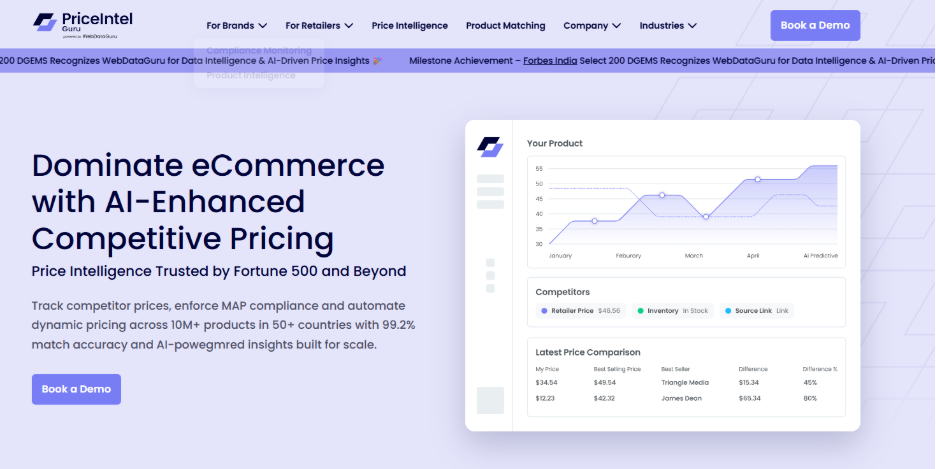
PriceIntelGuru, a flagship platform by WebDataGuru, is an AI-powered price intelligence, competitor price monitoring, product matching, MAP monitoring, and dynamic pricing platform built for retailers, eCommerce brands, manufacturers, distributors, marketplace sellers, and pricing teams. The platform helps businesses monitor competitor prices, track marketplace pricing, detect MAP violations, compare matched products, analyze stock availability, and automate pricing decisions from one easy-to-use dashboard. With coverage across 10M+ products in 50+ countries and 99.2% AI-driven product match accuracy, PriceIntelGuru helps businesses reduce manual SKU tracking, replace spreadsheets, protect margins, improve pricing agility, and make faster data-backed pricing decisions.
Key features:
AI-powered product matching across massive catalogs
Competitor price monitoring across websites and marketplaces
MAP monitoring to detect violations and protect brand pricing policies
Marketplace price tracking with stock availability insights
Retail price intelligence dashboards that show market position briefly
Dynamic pricing automation from a single dashboard
Built for retailers, brands, manufacturers, and distributors alike
Best for: Businesses that have outgrown basic price trackers and need enterprise-grade accuracy, broader product coverage, and a platform that replaces manual tracking entirely.
Why it stands out from Pricefy: While Pricefy is built primarily for SMB eCommerce stores, PriceIntelGuru is designed to scale across large catalogs and multiple business types of retailers, brands, and distributors with notably higher product-matching accuracy and broader country coverage. For teams currently relying on spreadsheets or part-time manual checks, that difference in coverage and accuracy tends to translate directly into protected margins.
2. Price2Spy
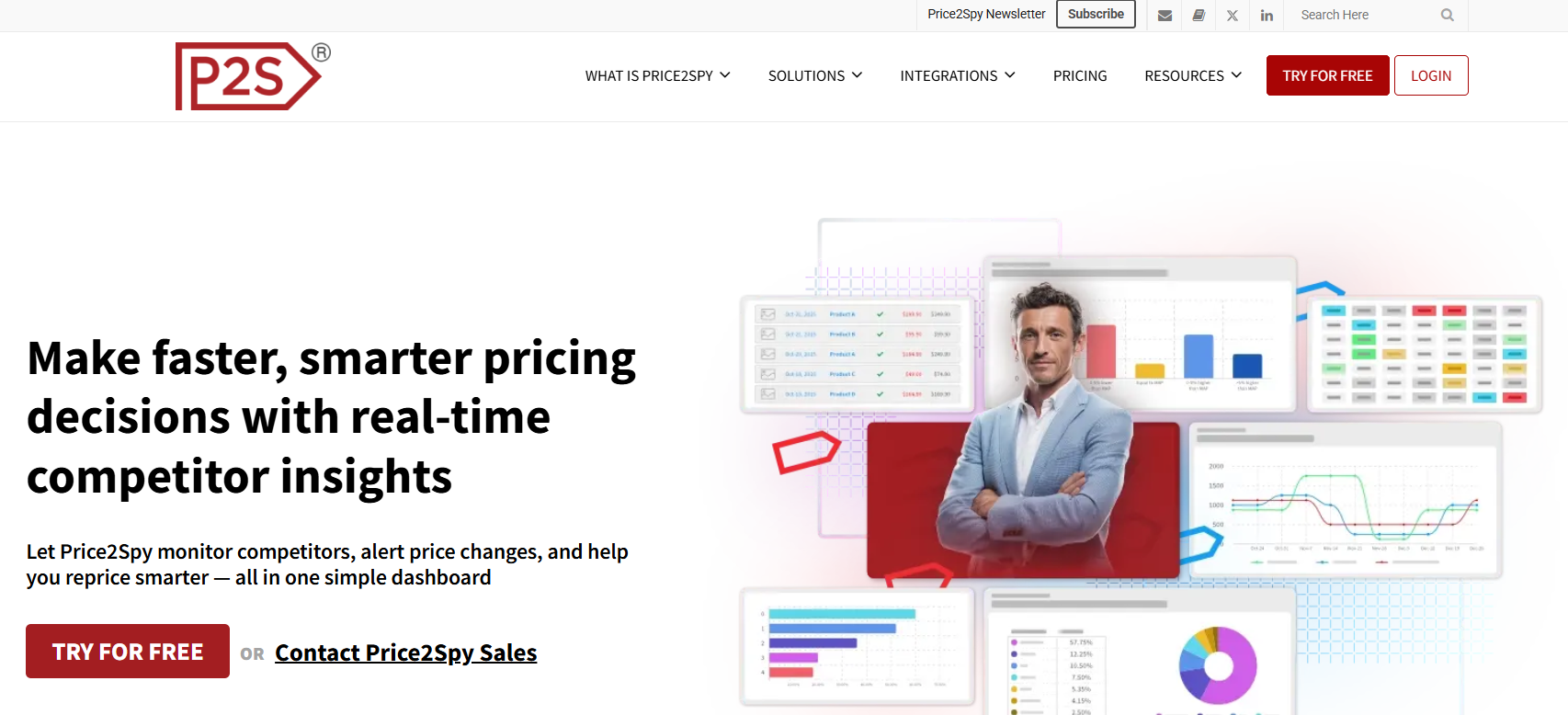
Price2Spy is one of the longest-running players in this space, having launched back in 2010. It's known for affordable entry pricing and strong scalability for larger catalogs, making it a popular choice for teams just starting with ecommerce price monitoring.
Key features:
Competitor price monitoring across websites and marketplaces
MAP/MSRP compliance monitoring
Customizable alerts and scheduled reports
Visual product verification using images and specs
Dynamic repricing rules
Pricing: Plans typically start under $40/month for smaller URL counts and scale up based on catalog size.
Best for: Budget-conscious teams that need reliable monitoring without paying for advanced AI repricing features.
Limitation: The interface feels dated compared to newer platforms, and pricing increases noticeably as product counts grow.
3. Competera
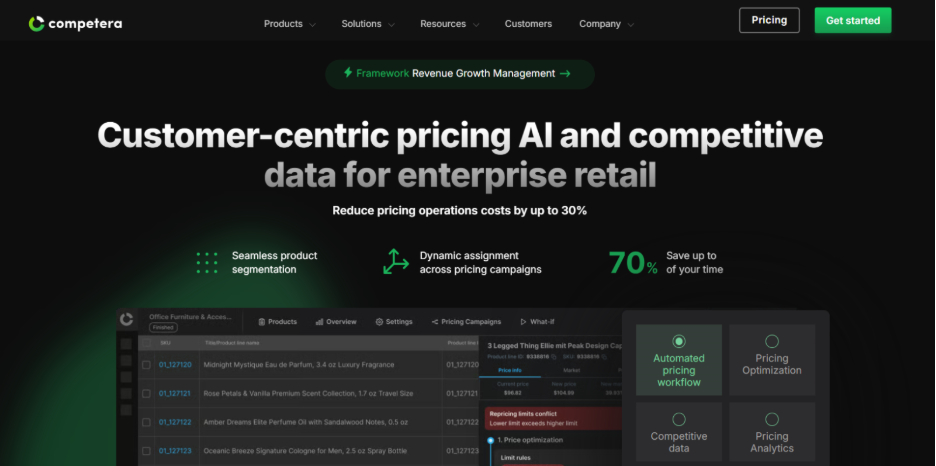
Competera takes a different approach than basic price trackers. Instead of just showing you what competitors charge, it uses AI to recommend what you should charge, factoring in demand elasticity, margin targets, and market position.
Key features:
AI-driven dynamic pricing recommendations
Demand-based pricing models
Scenario modeling to test pricing strategies before rollout
Enterprise-level competitive intelligence
Pricing: Enterprise pricing typically negotiated annually based on catalog size.
Best for: Large retailers with dedicated pricing teams that need AI-assisted repricing decisions, not just raw competitor data.
Limitation: Onboarding can take weeks, and the platform is generally overkill for smaller catalogs.
4. Wiser Solutions
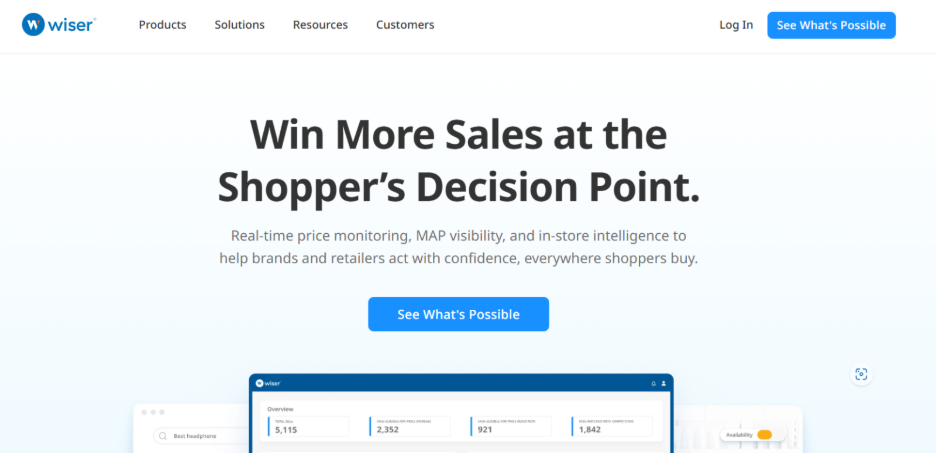
Wiser combines online price intelligence with retail execution features like in-store shelf auditing and merchandising compliance, making it a broader commerce execution suite rather than just a price tracker.
Key features:
Price monitoring across millions of SKUs
Machine-learning-based product matching
In-store shelf and merchandising compliance tools
Repricing automation
Best for: Brands and retailers that need visibility into both online pricing and physical retail execution.
Limitation: The platform can feel complex for teams that only need straightforward online competitor price monitoring.
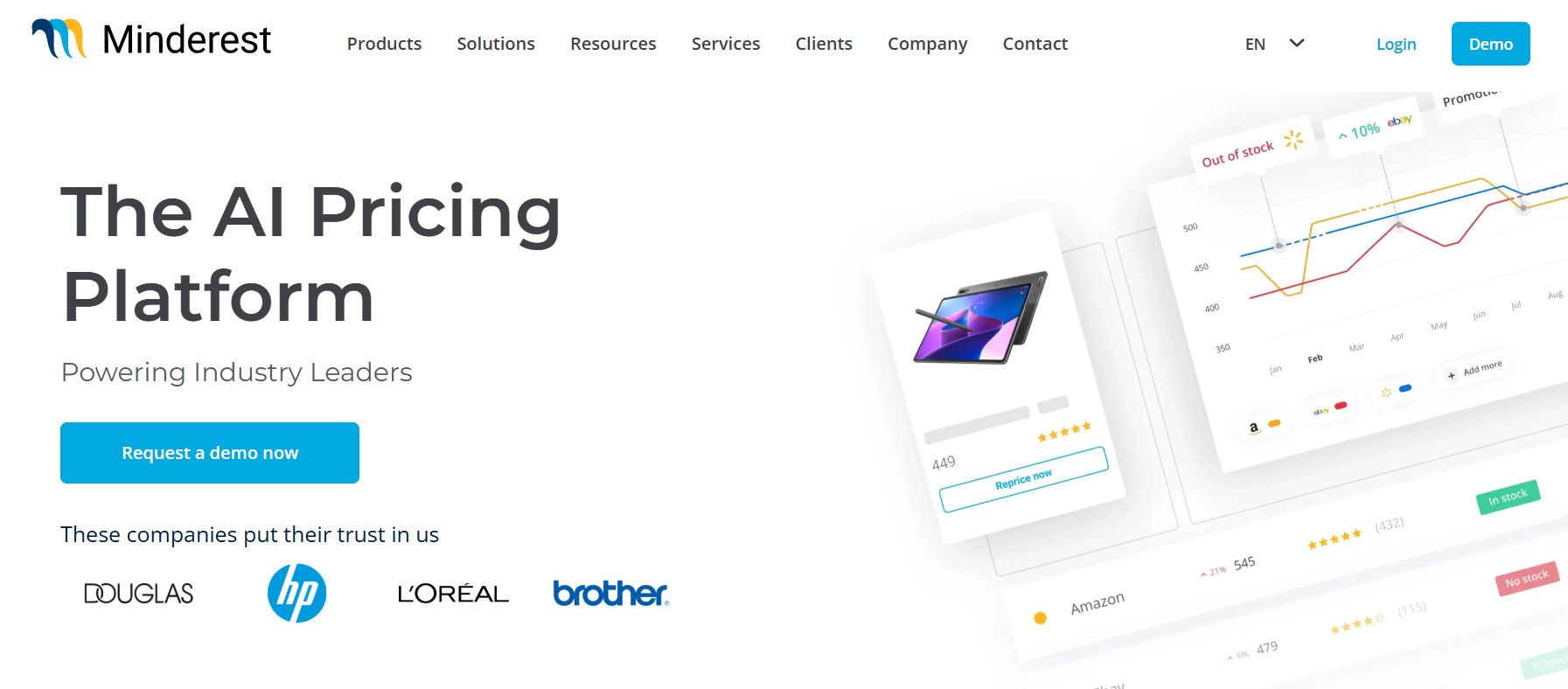
5. Minderest
Minderest has been operating since 2012 and positions itself as a unified, in-house-built pricing intelligence platform covering competitor monitoring, MAP compliance, and stock-level tracking.
Key features:
Multi-channel competitor price monitoring
MAP/MSRP violation detection
AI-based product matching without relying solely on barcodes
Dynamic pricing software
Best for: Brands and retailers that want an established, enterprise-leaning platform with strong MAP enforcement.
Limitation: No public pricing or free trial, and onboarding tends to favor larger organizations.
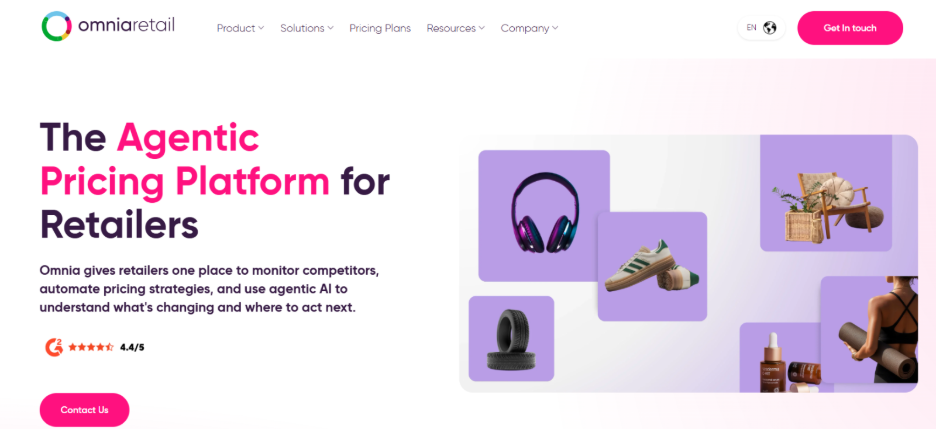
6. Omnia Retail
Omnia Retail focuses heavily on pricing automation paired with an agentic AI layer (Omnia Agent) that surfaces pricing insights without manual dashboard digging.
Key features:
Visual "Pricing Strategy Tree" for building rules without IT involvement
Competitor and marketplace monitoring (Amazon, eBay, Google Shopping, and more)
Transparent, auditable pricing logic
In-house data collection for higher accuracy
Best for: Mid-size to enterprise retailers in Europe that want automated pricing with full visibility into why each price changed.
Limitation: Pricing is demo-based rather than self-service, which adds friction for smaller teams.
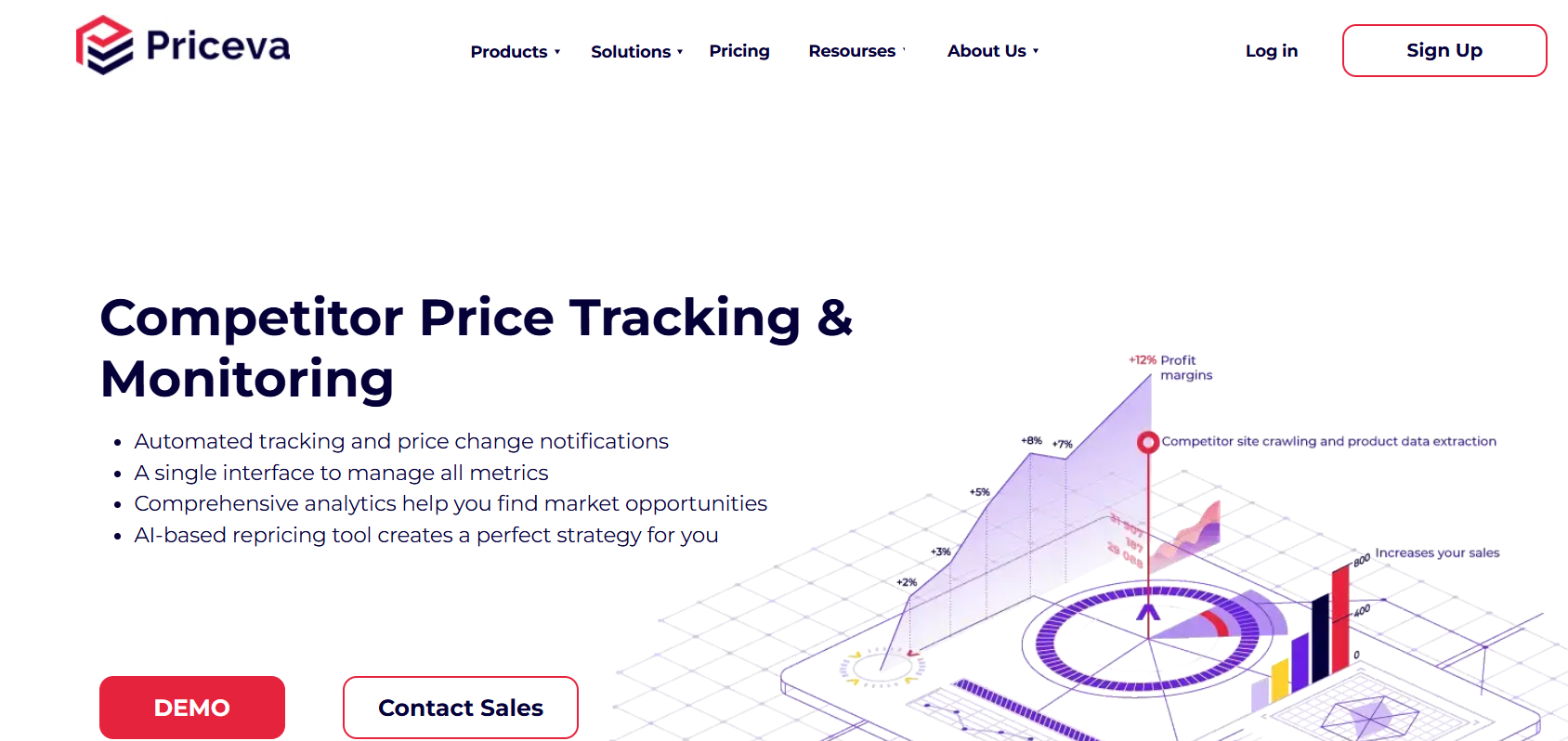
7. Priceva
Priceva positions itself as a balanced alternative that bundles competitor monitoring, MAP enforcement, and automated repricing into every paid plan, rather than charging extra for add-ons.
Key features:
Competitor price tracking with automated alerts
MAP monitoring included by default
Repricing simulator
Multi-format data export
Best for: Mid-market retailers and brands that want monitoring and repricing bundled together without enterprise-level contracts.
8. Intelligence Node
Intelligence Node markets one of the largest SKU repositories in the industry, with a strong emphasis on AI-driven product matching and frequent data refreshes across many languages and regions.
Key features:
Massive product database spanning billions of SKUs
High-accuracy AI product matching
Competitive pricing and assortment analytics
Multi-language, multi-region coverage
Best for: Large enterprise retailers needing the broadest possible data coverage.
Limitation: Enterprise-level pricing makes it inaccessible for small and mid-size businesses.
9. Profitero
Profitero focuses on monitoring competitor pricing alongside broader eCommerce performance metrics like sharing search and content quality across digital shelves.
Key features:
Competitor pricing and promotion tracking
Digital shelf analytics beyond just price
Retail media and content performance insights
Marketplace coverage across major retailers
Best for: Brands that want pricing data combined with a wider view of digital shelf performance.
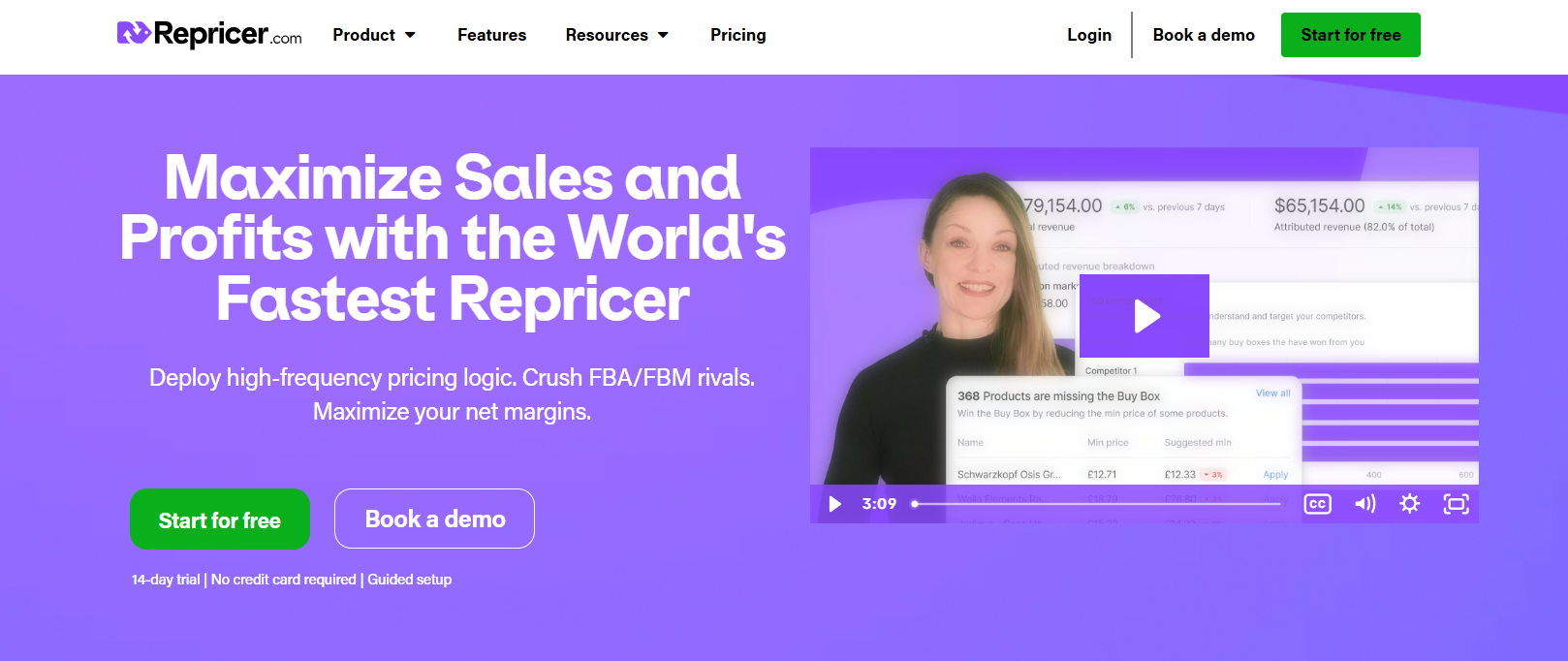
10. Repricer.com
Repricer.com is geared specifically toward marketplace sellers, particularly those on Amazon who need fast, automated repricing to win the Buy Box.
Key features:
Real-time Amazon repricing
Buy Box win-rate optimization
Rule-based and algorithmic repricing strategies
Marketplace-specific dashboards
Best for: Amazon-focused sellers whose primary goal is winning the Buy Box rather than broad multi-channel price intelligence.
Limitation: Less suited for brands that need MAP monitoring or cross-channel retail pricing intelligence.
Final Thoughts
Pricefy is a capable starting point for competitor price monitoring, but it isn't the only option for many growing retailers, brands, and distributors; it isn't the best long-term fit. If your business needs broader product coverage, higher product-matching accuracy, dedicated MAP monitoring, and AI-backed pricing decisions in one dashboard, it's worth evaluating a platform like PriceIntelGuru alongside the other tools covered here.
The right choice ultimately comes down to your catalog size, your industry, and whether you need simple monitoring or full pricing automation. A small store tracking five competitors has very different needs than a national distributor managing tens of thousands of SKUs across dozens of resellers, and the right software for each looks quite different too.
Take advantage of free trials or demos where available, test the product matching accuracy on your own catalog before committing, and pay close attention to how each platform handles edge cases like product variants, bundles, and out-of-stock items. Pricing tools tend to look similar on a features page; the real differences usually show up once you load in your actual catalog. Choose the platform that fits where your business is headed not just where it is today, and you'll avoid having to switch tools again in another year.
Frequently Asked Questions
1. What is the best overall Pricefy alternative for large catalogs?
For businesses managing large product catalogs across multiple countries, PriceIntelGuru is a strong choice thanks to its AI-driven product matching accuracy and coverage across 10 million-plus products in over 50 countries.
2. Is there a free Pricefy alternative?
Some platforms, including Pricefy itself, offer limited free tiers for small catalogs. Most full-featured competitive pricing software, however, requires a paid plan once you need MAP monitoring, marketplace tracking, or dynamic pricing automation.
3. What's the difference between price monitoring software and pricing optimization software?
Price monitoring software tracks what competitors charge and alert you to changes. Pricing optimization software goes a step further, using AI to recommend or automatically set the ideal price based on demand, margin targets, and market position.
4. Which alternative is best for MAP compliance?
Platforms with built-in MAP monitoring such as PriceIntelGuru, Minderest, and Priceva are purpose-built for brands and manufacturers that need to detect and act on minimum advertised price violations across resellers.
5. Do these tools work for marketplace sellers, not just webshops?
Yes. Most platforms on this list, including PriceIntelGuru, Wiser, and Repricer.com, support marketplace price monitoring across Amazon, eBay, and other major platforms, in addition to standard eCommerce websites.
6. How is full pricing intelligence different from a basic price checker?
A basic price checker simply tells you about a competitor's current price. A complete solution goes much further tracks price history, market position, stock availability, and promotional patterns, then turns that data into dashboards and reports your team can act on. The best platforms also flag MAP violations and feed pricing data directly into automated repricing rules, so monitoring and action happen in one connected workflow instead of two separate steps.
Transform Your Pricing Strategy Today
Thank you! Your submission has been received!
Oops! Something went wrong while submitting the form.