


.png)
.png)


© 2025 PriceIntelGuru. All Rights Reserved
Industrial parts manufacturing operates in a market where precision, reliability, and cost control determine long-term success. Yet even the highest-quality components can lose ground if pricing is misaligned with market realities. Buyers today compare suppliers across digital catalogs, distributor portals, and B2B marketplaces within minutes. Pricing transparency has reshaped how industrial purchasing decisions are made.
In this environment, competitor price monitoring has become a critical capability for manufacturers seeking sustainable growth. It provides structured visibility into how comparable products are priced across channels and regions, enabling companies to refine their competitive product pricing strategy without sacrificing profitability.
Rather than reacting to isolated price changes, industrial manufacturers can rely on data-driven insight to guide strategic decisions. With the support of modern price monitoring software and advanced pricing software, pricing evolves from a reactive process into a measurable growth lever.
The Pricing Landscape in Industrial Parts Manufacturing
Pricing in industrial manufacturing is inherently complex. Unlike consumer retail, where pricing may fluctuate daily, industrial pricing often involves contracts, distributor agreements, volume tiers, and regional adjustments. However, digital transformation has accelerated transparency even in B2B markets.
A single industrial component may be available through multiple distributors, independent resellers, and global sourcing platforms. Each may apply its own discounting logic or promotional structure. Without structured competitor price monitoring, manufacturers risk operating without a clear understanding of their true market position.
Material costs such as steel, aluminum, and specialty alloys fluctuate frequently. Transportation expenses shift with fuel prices and global logistics constraints. Meanwhile, customers expect consistent and competitive pricing regardless of channel.
This combination of volatility and transparency demands a more sophisticated approach to price monitoring.
What Competitor Price Monitoring Really Means
Competitor price monitoring goes beyond checking a rival’s catalog periodically. It is a systematic process of tracking, analyzing, and interpreting competitor pricing data across relevant channels.
For industrial parts manufacturers, this includes monitoring equivalent SKUs, substitute components, and region-specific pricing variations. Effective monitoring identifies price movements over time, detects emerging discount patterns, and highlights discrepancies that could impact competitiveness.
When supported by price monitoring software, the process becomes automated and scalable. Instead of relying on manual research or anecdotal feedback from sales teams, manufacturers gain structured, real-time insight into the market.
The objective is not to copy competitor prices. It is to understand positioning within the broader landscape and make informed strategic decisions.
Why Industrial Manufacturers Cannot Ignore Competitive Pricing Signals
Competitive product pricing in industrial markets directly influences both revenue and reputation. If pricing consistently exceeds market benchmarks without clear value differentiation, sales teams face increased resistance. If pricing drops too aggressively, margins erode and brand value weakens.
Competitor price monitoring allows manufacturers to maintain balance. It helps identify where premium pricing is justified and where adjustments are necessary to protect market share.
In addition, monitoring reveals early warning signs of aggressive competitor strategies. For example, if a competitor begins discounting heavily in a particular region, data-driven visibility enables proactive response rather than delayed reaction.
In a market where long-term contracts and relationships matter, being informed is essential.
The Role of Price Monitoring Software in Industrial Operations
Manual price tracking is not sustainable in large industrial catalogs containing thousands of SKUs. Advanced price monitoring software automates data collection and validation, ensuring that pricing teams work with accurate, up-to-date information.
These platforms match products based on technical specifications, part numbers, and attributes, reducing the risk of inaccurate comparisons. They also track pricing trends over time, providing context for decision-making.
When integrated with broader pricing software systems, competitor insights can inform internal pricing rules, approval workflows, and performance reporting. This integration transforms monitoring into an operational asset rather than an isolated activity.
By embedding competitor price monitoring into daily workflows, manufacturers reduce reliance on assumptions and improve consistency across regions.
Building a Competitive Product Pricing Framework
A structured approach to competitive product pricing begins with clarity. Manufacturers must define which competitors matter most and which channels influence purchasing decisions.
Competitor price monitoring provides the data foundation for this framework. Pricing teams can segment products based on strategic importance, margin sensitivity, and market exposure. High-volume components may require closer alignment with competitor pricing, while specialized parts with limited substitutes may sustain premium positioning.
Data-driven insight enables more nuanced decisions. Rather than applying blanket discounts, manufacturers can tailor pricing adjustments based on measurable market conditions.
This disciplined approach protects margins while strengthening competitiveness.
Operational Benefits Beyond Pricing
While the primary purpose of competitor price monitoring is to inform pricing strategy, the benefits extend further.
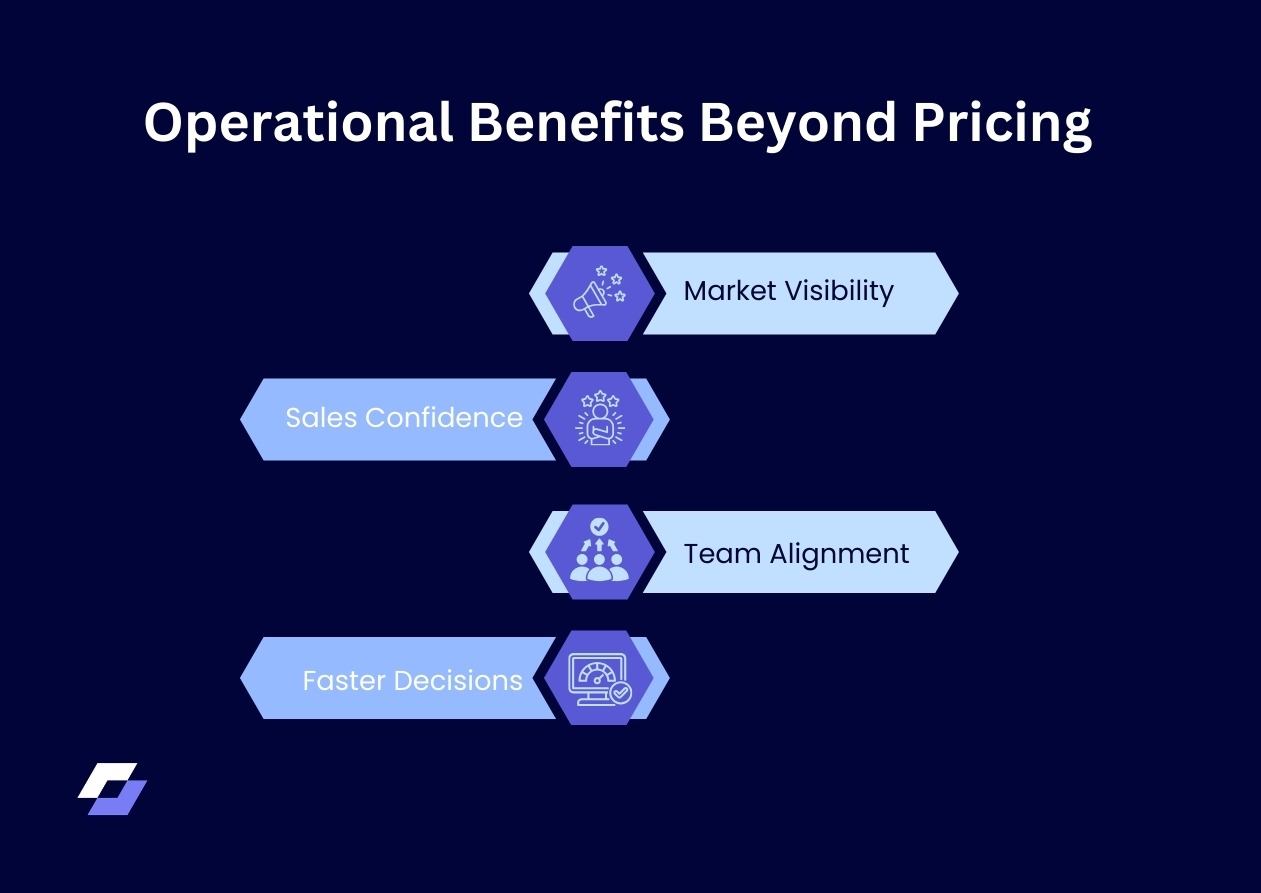
Sales teams gain confidence in negotiations when equipped with accurate market data. Procurement teams can anticipate cost pressures reflected in competitor pricing trends. Leadership teams receive clearer insight into regional performance and margin dynamics.
Price monitoring software creates a shared understanding of market realities across departments. Instead of isolated opinions, decisions are grounded in consistent data.
This alignment reduces friction and accelerates decision-making.
Common Risks Without Structured Monitoring
Manufacturers that lack systematic competitor price monitoring often encounter recurring challenges. Pricing decisions may rely heavily on feedback from a limited set of customers or distributors. This narrow perspective can lead to overreaction or underreaction to market changes.
Inconsistent pricing across regions may emerge without centralized oversight. Margin erosion can occur gradually as discounts are applied without full visibility into competitive positioning.
Over time, these issues compound. Competitors gain ground, and profitability weakens. Structured price monitoring mitigates these risks by providing continuous, reliable insight.
Measuring the Financial Impact of Competitor Price Monitoring
Pricing remains one of the most powerful drivers of profitability in industrial manufacturing. Even modest improvements in average realized margin can generate significant financial returns when applied across large product portfolios.
Competitor price monitoring contributes to measurable ROI by preventing unnecessary discounting and identifying opportunities for optimized pricing. It enables faster response to market shifts, reducing the likelihood of lost sales due to outdated pricing.
When supported by integrated pricing software, monitoring insights can be translated directly into strategic adjustments with measurable impact.
The result is not just improved competitiveness, but sustainable profitability.
Integrating Monitoring into Long-Term Strategy
Competitor price monitoring should not function as a temporary initiative. It must be embedded within long-term strategy.
Successful manufacturers integrate monitoring into planning cycles, quarterly reviews, and performance evaluations. Insights inform decisions about product portfolio expansion, regional investment, and distributor partnerships.
By aligning monitoring with broader strategic goals, companies ensure that pricing decisions reinforce overall business objectives.
In a market characterized by volatility and digital transparency, structured monitoring is no longer optional. It is foundational.

Conclusion
Competitor price monitoring has become a strategic necessity in industrial parts manufacturing. As markets grow more transparent and competition intensifies, manufacturers must rely on structured data rather than assumptions.
By leveraging advanced price monitoring software and integrated pricing software systems, industrial businesses can refine competitive product pricing strategies while protecting profitability. Continuous price monitoring ensures that decisions are timely, consistent, and aligned with long-term goals.
At Priceintelguru, we help industrial parts manufacturers transform raw pricing data into actionable intelligence that strengthens competitiveness and supports sustainable growth.
If you are ready to gain clearer market visibility and improve pricing performance, schedule a personalized demo with Priceintelguru today and discover how structured competitor price monitoring can elevate your industrial pricing strategy.