


.png)




© 2025 PriceIntelGuru. All Rights Reserved
The automotive spare parts market has developed into an industry sector which shows the highest sensitivity to price changes. Customers compare prices across multiple websites, marketplaces, and local dealers before making a purchase. Brands and distributors face fierce competition because they operate with narrow profit margins while needing to maintain product visibility in the market.
In this environment, competitor price tracking is no longer optional. The spare parts manufacturers and aftermarket brands and distributors and automotive dealers need this capability because they want to maintain their market position while protecting their profit margins.
The guide provides an explanation of competitor price tracking which applies to the automotive spare parts industry. The guide demonstrates the essential nature of competitor price tracking which functions as an important component of automotive spare parts. The guide explains how to track competitor prices from your competitors to help your business. how modern price tracking software helps businesses turn pricing data into a strategic advantage.
The Pricing Challenges in the Automotive Spare Parts Market
The pricing of spare parts breaks into multiple separate segments which makes it different from vehicle sales. The same product can be sold by OEM dealers, independent distributors, ecommerce platforms, and online marketplaces often at very different prices.
Some of the most common pricing challenges include:
- Multiple sellers offering identical or equivalent parts
- Frequent price changes driven by promotions and stock levels
- Lack of visibility into competitor pricing across channels
- Pressure to match the lowest price without context
- Difficulty maintaining consistent pricing across regions
Without a structured price tracking approach, many businesses rely on assumptions or outdated data. This often leads to reactive pricing decisions that hurt margins and brand credibility.
What Is Competitor Price Monitoring?
Although the term “monitoring” is often used interchangeably, in the spare parts market it closely overlaps with competitor price tracking. Sometimes, competitors carry spare parts that are similar in quality to those of these same parts.
Using a dedicated price tracking service, businesses can automatically gather pricing data from competitor websites and ecommerce stores and marketplaces. The system provides teams with precise and timely market data which reflects actual market conditions instead of requiring them to conduct manual price checks.
The study aims to measure price differences between companies while working to develop understanding of pricing patterns and discover potential business opportunities and create effective pricing strategies.
Why Competitor Price Tracking Matters for Automotive Brands & Dealers
In the spare parts market, even a small price difference can shift buying decisions. Customers search online for part numbers to conduct immediate price comparisons between different sellers.
For automotive brands and dealers, competitor price tracking helps answer key questions:
- Are competitors consistently undercutting your prices?
- Which spare parts face the most intense price competition?
- How often do competitors change prices?
- Are your products priced correctly across all channels?
With reliable product price tracking, businesses gain clarity and control. Instead of reacting blindly, pricing decisions are based on real market data.
Key Benefits of Competitor Price Tracking
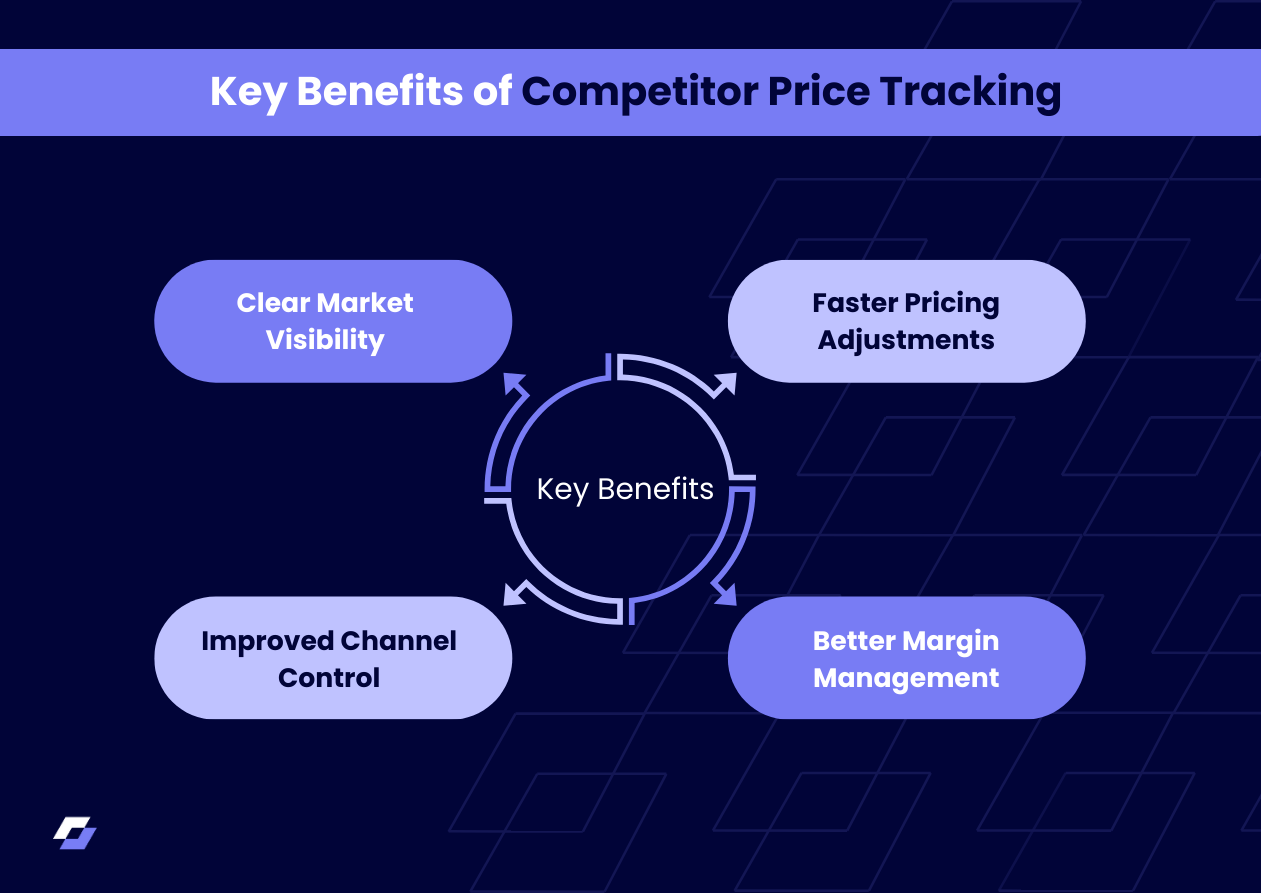
1. Clear Market Visibility
Competitor price tracking provides a unified view of pricing across competitors and channels. The ability to track pricing across different channels and competitors helps businesses in the automotive spare parts market which has multiple distribution points.
2. Faster Pricing Adjustments
Automated tracking enables pricing teams to track their competitors and make pricing adjustments in real time. The system protects against sales losses that occur when prices remain unchanged from past rates.
3. Better Margin Management
Rather than taking the low road with prices, businesses can find markets with a burning desire for low-price and make sure to offer some sense of margin elsewhere.
4. Improved Channel Control
In today's competitive business structure, brand owners are only interested in tracking the prices at which their distributors or partners are selling written-off spares.
Real-World Use Cases in the Automotive Spare Parts Industry
Competitor price tracking supports different stakeholders across the spare parts ecosystem.
1. OEM Spare Parts Manufacturers
OEMs use price tracking software to monitor how their genuine parts are priced by dealers and resellers. The system tracks prices to maintain price uniformity while safeguarding the worth of the brand.
2. Aftermarket Brands
Aftermarket manufacturers use competitor pricing information to set their product prices which they believe will help them compete in the market while they showcase their product quality and value instead of participating in price wars.
3. Distributors and Wholesalers
Distributors depend on product price tracking to maintain their competitive edge throughout different regions and sales channels because they need to serve customers who shop both online and offline.
4. Ecommerce Spare Parts Sellers
Online retailers use price tracking service insights to optimize their pricing. They need this service so they can maintain their presence in markets that have high competition.
How Competitor Price Tracking Supports a Competitive Pricing Strategy
A strong competitive pricing strategy requires more than occasional price checks. It depends on accurate, up-to-date data and a clear understanding of market dynamics.
Competitor price tracking enables automotive spare parts businesses to:
- Identify pricing trends before they impact demand
- Segment competitors based on pricing behavior
- Adjust pricing by channel, region, or product category
- Align promotions with real market conditions
Instead of constantly reacting to competitors, businesses can proactively shape pricing strategies that balance competitiveness and profitability.
The Role of Price Tracking Software in Spare Parts Pricing
Manual price checks are time-consuming and unreliable, especially for large catalogs. This is why modern price tracking software has become essential in the automotive spare parts market.
Advanced tools automate data collection and provide actionable insights such as:
- Continuous competitor price tracking
- Accurate product matching by part number and specifications
- Alerts for significant price changes
- Historical price trend analysis
- Dashboards designed for pricing and sales teams
With the right technology, pricing teams can focus on strategy instead of data collection.
Common Pricing Mistakes Without Competitor Tracking
Businesses that operate without structured competitor price tracking often fall into avoidable traps.
One common mistake is over-discounting. Brands fail to maintain their profit margins because they decrease prices without understanding their competitors' goals. Another problem occurs when pricing teams learn about competitor changes after sales performance has already dropped.
The main errors which occur include businesses using different prices for their products in various sales platforms and their need to track prices through manual methods and their failure to observe how competitors change their prices. Over time, these issues weaken both profitability and customer trust.
How to Choose the Right Price Tracking Service
Not all solutions are built for the complexity of the automotive spare parts market. When selecting a price tracking service, businesses should consider:
- Coverage of automotive-specific marketplaces and sellers
- Accurate matching for equivalent spare parts
- Scalability for large product catalogs
- Reliable data accuracy and update frequency
- Clear reporting that supports pricing decisions
The right platform should support both day-to-day pricing actions and long-term pricing intelligence goals.

Conclusion
The automotive spare parts market is highly competitive, transparent, and fast-moving. In such an environment, relying on intuition or manual price checks is no longer enough. Competitor price tracking provides the visibility and insights needed to compete intelligently without sacrificing profitability.
By using a reliable price tracking service and advanced price tracking software, automotive businesses can transform raw pricing data into strategic action. Solutions like PriceIntelGuru empower spare parts brands, distributors, and dealers to stay competitive, protect margins, and make confident pricing decisions backed by real market intelligence.