




© 2025 PriceIntelGuru. All Rights Reserved
Running a multi-channel retail business means managing prices across your website, Amazon, Walmart, and more simultaneously. One mispriced SKU can cost you sales, margins, or both.
The right competitor price monitoring software fixes that. It gives you real-time visibility into what competitors are charging and lets you make data-driven pricing decisions across every channel you operate in.
But not all tools are built the same. This guide breaks down exactly what to look for when evaluating competitor price tracking software for multi-channel retail.
What Is Competitor Price Monitoring Software?
Competitor price-monitoring software is a technology solution that automatically tracks and analyzes competitor pricing across websites, marketplaces, and retail channels.
At its core, a price tracking service does three things: scrapes competitor pricing data, matches it to your product catalog, and delivers actionable insights through dashboards, reports, and alerts. For multi-channel retailers, this is not a nice-to-have - it is a competitive necessity.
Why Multi-Channel Retail Needs a Specialized Pricing Tool
Multi-channel retail introduces pricing complexity that single-channel businesses simply do not face. The same product may need different pricing strategies on Amazon, your DTC site, and in-store, each with its own competitive dynamics and margin structure.
A basic price monitoring software may only track one channel, leaving you with dangerous blind spots. The key challenges unique to multi-channel pricing include:
- Matching the same product across different competitor listings and naming conventions
- Tracking price changes in real time across Amazon, Walmart, Google Shopping, and brand websites
- Maintaining pricing consistency without violating MAP (Minimum Advertised Price) policies
- Managing SKU-level data at high volumes without losing accuracy
Top 7 Features to Look for in Competitor Price Monitoring Software
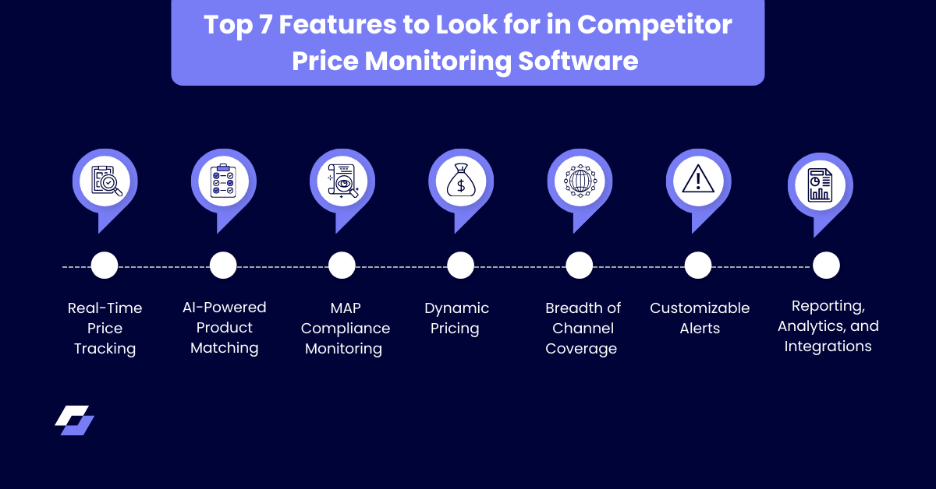
1. Real-Time Price Tracking
Look for tools that offer hourly or sub-hourly crawling frequencies, not just daily snapshots. In fast-moving categories like auto parts or consumer electronics, pricing can change multiple times a day.
2. AI-Powered Product Matching
Product matching links to a competitor listing the correct item in your catalog, even when names and SKUs differ. Poor matching leads to bad data and bad decisions. PriceIntelGuru uses advanced AI algorithms for high-accuracy product matching across large, complex catalogs.
3. MAP Compliance Monitoring
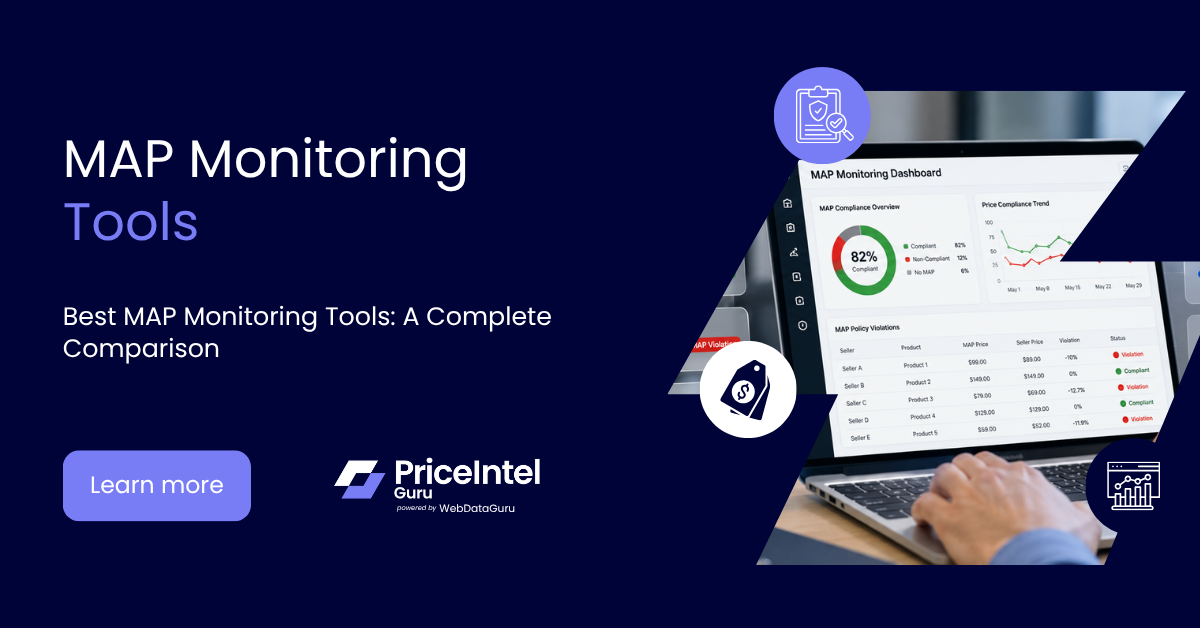
If you are a brand or authorized reseller, you need to know when someone is selling below your minimum advertised price fast. A strong competitor in price tracking software should include automated MAP violation alerts and historical compliance reporting.
4. Dynamic Pricing
Look for a built-in repricing engine that lets you set guardrails, such as never going below cost or always staying within 2% of the market leader, while protecting your margins.
5. Breadth of Channel Coverage
Your tool is only as useful as the sources it covers. Must-have coverage for US retailers includes Amazon (including Buy Box data), Walmart.com, Google Shopping, and major retailer websites like Target and Best Buy.
6. Customizable Alerts
The best price tracking service platforms send proactive alerts when meaningful pricing events occur - a competitor undercutting you, a MAP violation, or a sudden price spike on a key SKU. Look for email and Slack delivery with SKU-level alert controls.
7. Reporting, Analytics, and Integrations
Your price monitoring software must be integrated with your ERP and eCommerce platform (Shopify, Magento, WooCommerce). The dashboards must be shared, and the historical data must be robust enough to identify trends over time.
What Are the Mistakes When Choosing Price Monitoring Software?
Retailers often regret their pricing tool choices within the first six months. Here are the most common evaluation mistakes to avoid:
- Choosing based on price alone: Cheaper tools often cut corners on data quality, matching accuracy, or channel coverage. Poor data leads to poor decisions.
- Not testing with your own catalog: Always run a proof of concept using your actual SKUs before committing. Generic demos do not reveal real-world data quality issues.
- Ignoring scalability: A tool that works fine for 500 SKUs may struggle at 50,000. Ask for performance benchmarks for your catalog size.
- Overlooking support and onboarding: Pricing intelligence tools require proper setup. Vendors with weak onboarding create frustration and underutilization.
- Forgetting data freshness: Daily price updates may seem sufficient, but in competitive retail, a 24-hour lag can cost thousands of sales.
Why Do Multi-Channel Retailers Choose PriceIntelGuru?
PriceIntelGuru is designed for retailers and brands competing across multiple digital channels. The platform combines AI-powered product matching, real-time competitor price monitoring, and pricing intelligence to help businesses make faster, more accurate pricing decisions.
Key capabilities include product intelligence, which provides structured insights into how products are priced, positioned, and promoted across online channels and marketplaces. Pricing intelligence enables businesses to analyze competitor pricing data, including list prices, discounts, and shipping costs, to support smarter decisions.
Competitor price monitoring helps track pricing, promotions, and inventory changes across websites and marketplaces to stay competitive. AI-powered product matching identifies identical or similar products across competitor catalogs using advanced matching technology.
Marketplace monitoring gives visibility into pricing activity across major platforms like Amazon and Walmart. In contrast, dynamic pricing uses real-time market insights and competitor data to adjust pricing strategies and respond quickly to changing market conditions.
Conclusion:
The selection of appropriate competitor price-monitoring software in a multi-channel retail environment environment directly influences revenues and competitiveness. Missing data, delayed notification, or incorrect product identification may result in lost pricing. Assess solutions based on data accuracy, ability to match products, competitor price tracking and the marketplace's coverage area. PriceIntelGuru helps retailers, brands, and eCommerce with real-time pricing information, AI-based product matchmaking, and competitive intelligence to make smarter pricing decisions and survive in ever-changing online markets.