


.png)
.png)


© 2025 PriceIntelGuru. All Rights Reserved
It usually starts with an email from your best retail partner. They’ve found your flagship product on a marketplace at 18% below MAP, and they want to know why they’re still holding the line when someone else isn’t.
The few dollars you lose on that listing aren’t the real problem. Your partner is now wondering whether your MAP policy means anything, and if they decide it doesn’t, they’ll drop their price too. Other resellers usually follow within days. Once shoppers have seen the lower price, it’s hard to get them to accept the old one.
So the next email you send carries more weight than it looks. Write it too gently and the reseller ignores it. Come in too hard and you can damage a relationship that’s been profitable for years, or create legal problems you didn’t need. We’ve put together four templates, one for each stage of enforcement, that you can adapt to your own policy.
What Is a MAP Violation Letter?
A MAP violation letter is a written notice from a brand to a reseller whose advertised price has dropped below the brand’s minimum advertised price. It points to the listing, states the price your policy requires, and sets a deadline for the reseller to fix it.
Each letter also adds to your enforcement record: when you found the problem, what you asked for and how the reseller responded. If you later pause supply to a repeat violator or end the relationship, that history shows you held every reseller to the same rules.
[Legal Note/card]: A MAP policy is a rule your company sets on its own, without negotiating it with resellers. Your letters should state the policy and what happens if it’s broken, and they shouldn’t ask a reseller to agree to a price. Have your legal team review these templates before you use them. This article isn’t legal advice.
Before You Send: Confirm the Violation
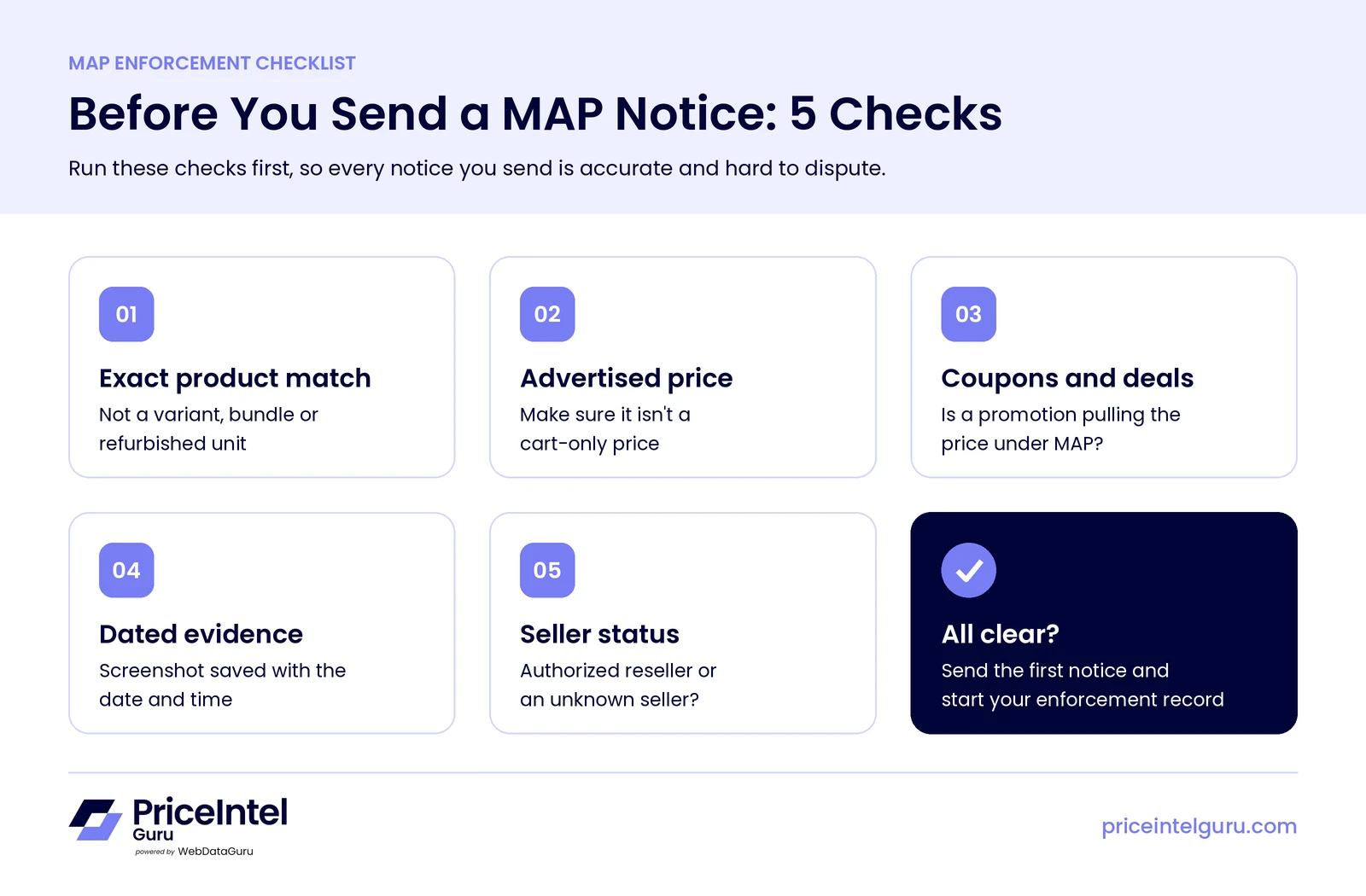
A notice sent over a false alarm wastes the reseller’s time on a listing that was never wrong, and it makes them take your next letter less seriously. Check these points before anything goes out:
- Is it the exact same product? A different size, color, pack quantity or a refurbished unit may carry its own MAP, or none at all.
- Is the low price advertised, or does it appear only in the cart? Many MAP policies cover only the advertised price, so check what yours says.
- Is a coupon or deal badge pulling the price under MAP? Whether that counts depends on how your policy treats promotions.
- Do you have a dated screenshot of the listing? Prices change quickly, and without proof the reseller can say the low price was never there.
- Is the seller on your authorized list? An authorized partner and an unknown seller need different letters.
Product mismatches are a common source of false alarms. Sellers rename listings, change pack sizes and bundle items, so your monitoring tool has to recognize your product under every version of its listing. PriceIntelGuru’s AI product matching does this with accuracy, so each notice points to the right product.
What to Include in Every MAP Violation Letter
A reseller should be able to fix the problem from your letter alone, without writing back to ask which listing you mean. Every notice needs:
- The product name, SKU and UPC
- Your MAP for that product and the price the reseller advertised
- A link to the listing and the marketplace or website it appears on
- The date and time you found it, with the screenshot attached
- A link to your current MAP policy
- A clear deadline to correct the price
- A named contact who can answer questions
Keep the tone factual, and keep the letter short enough to read in one pass.
4 Free MAP Violation Letter Templates
Each template below covers one stage of enforcement. Change the bracketed fields, match the deadlines to your own policy and have your legal team approve the final wording before you use it.
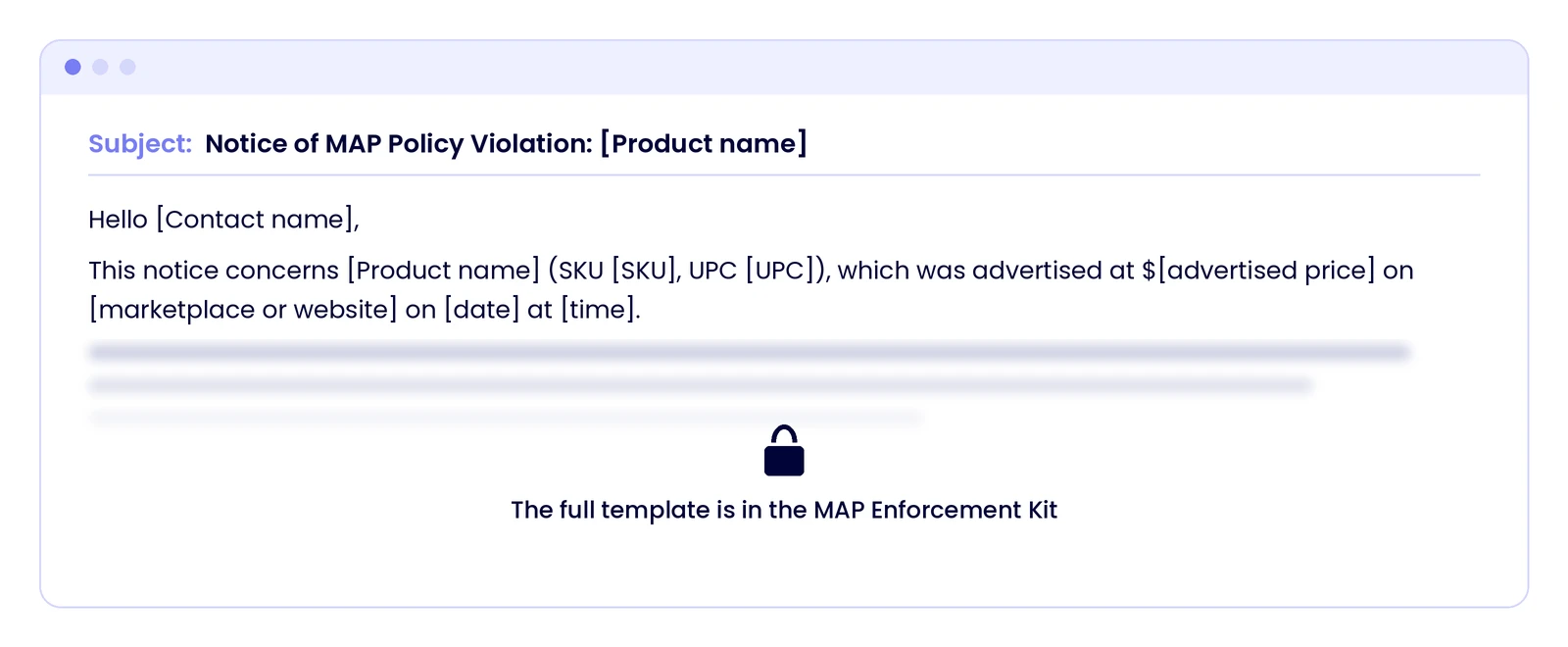
Template 1: Friendly First Notice
Use this the first time an authorized reseller slips below MAP, or the first time in a long while. In our experience, this is usually a mistake rather than a strategy. Someone set up a pricing rule without a MAP floor, or a promotion ran a few days longer than it should have. A polite note with the details is normally all it takes.
Template 2: Second Warning
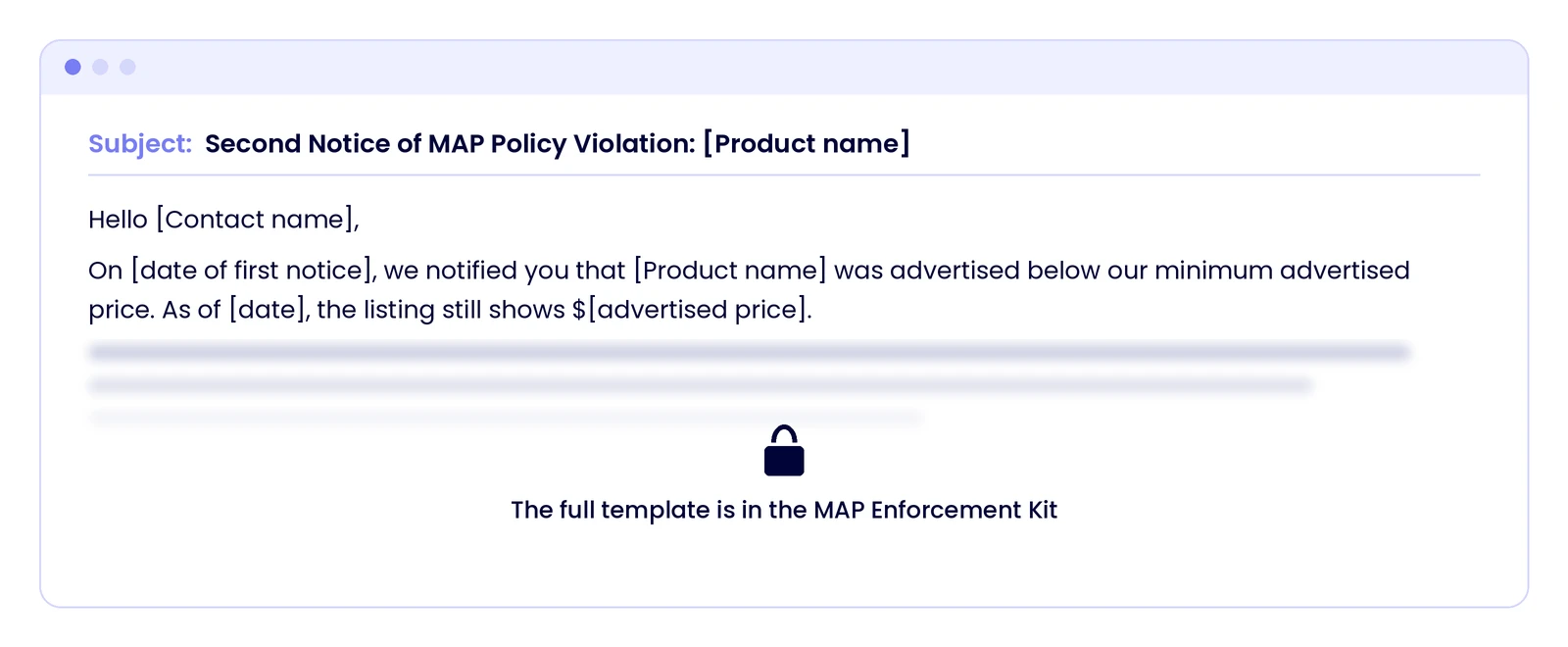
If the reseller misses the first deadline, or the same product drops below MAP again, move to a more formal letter. This one names the consequence your policy sets for repeat violations.
Template 3: Final Notice
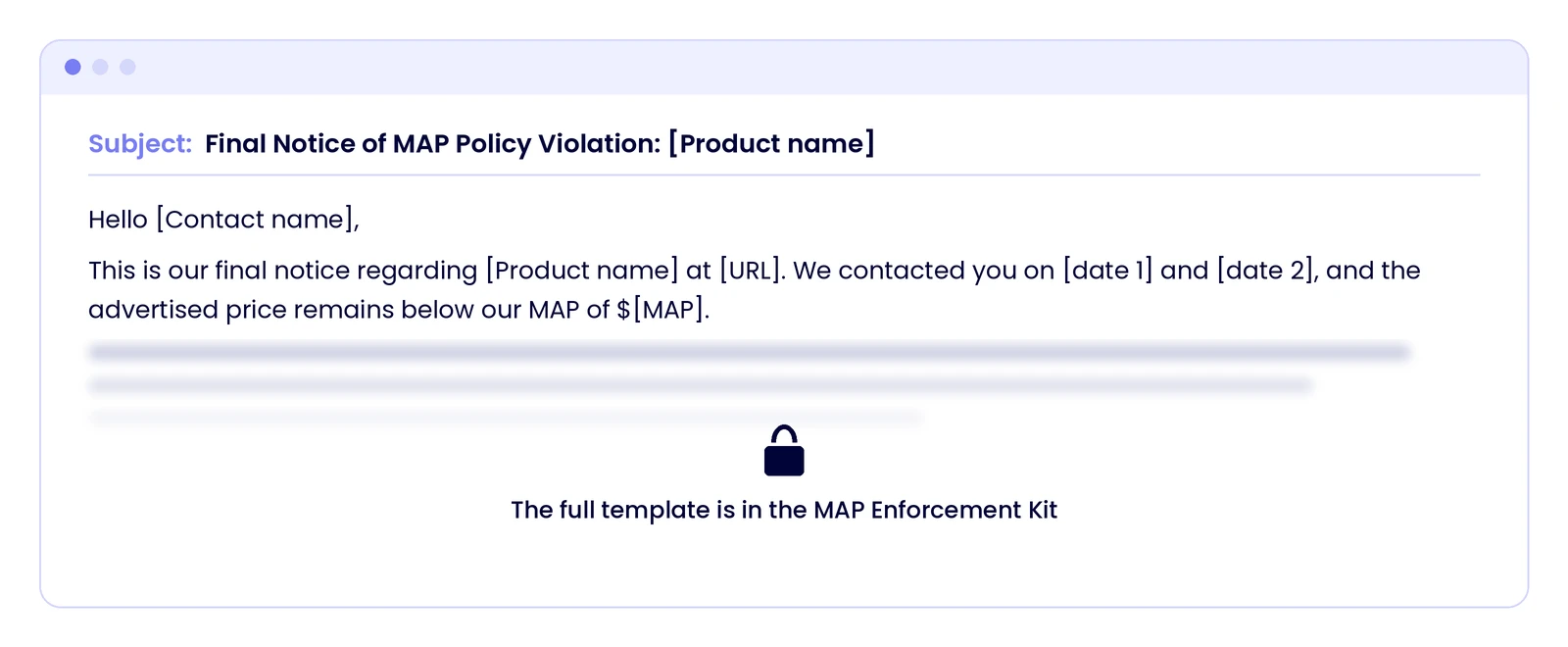
By this stage, the reseller has ignored two notices or keeps dropping back below MAP. The final notice spells out what your policy says will happen next, for example a pause on orders for that SKU, and the date it starts. Don’t use a template if things look like they’re heading toward a cease-and-desist letter. That’s a job for your legal counsel.
Template 4: Unauthorized Seller Notice
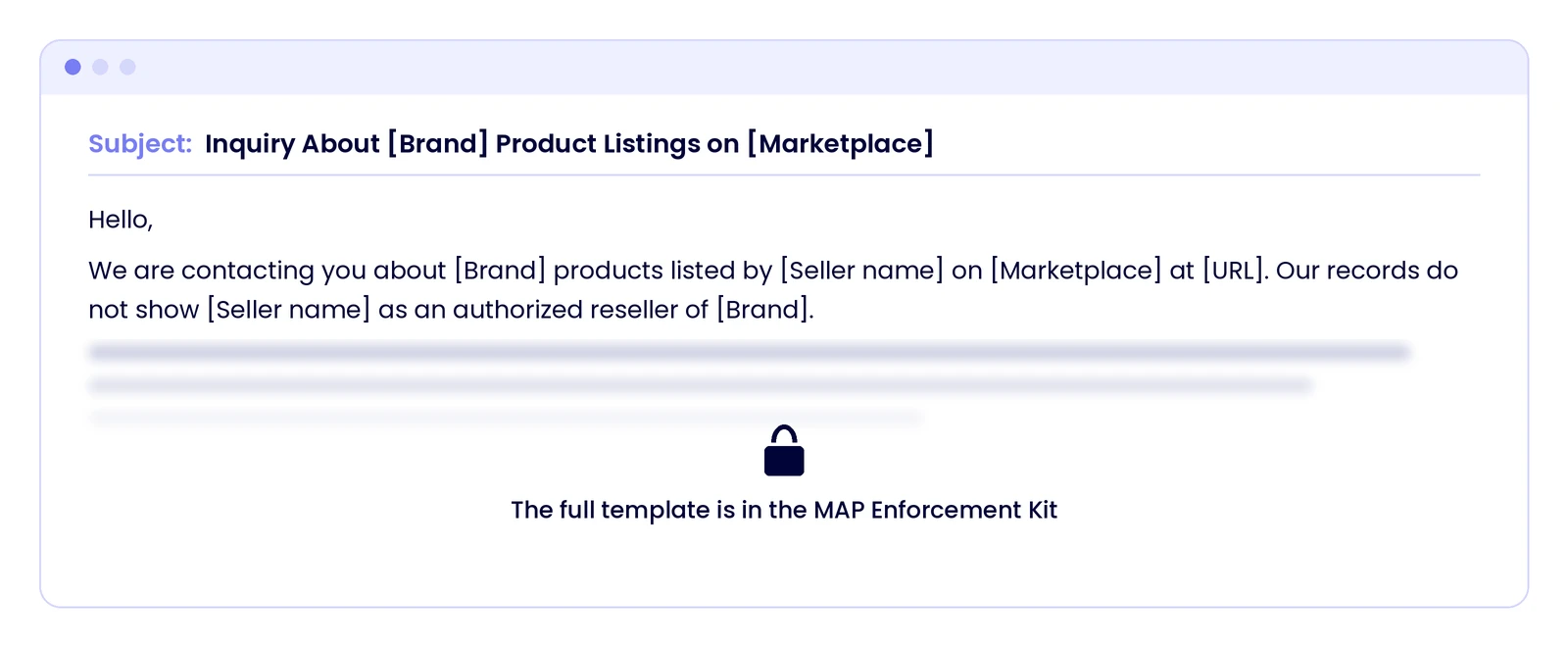
Sellers who aren’t on your authorized list are common on Amazon, eBay and Walmart Marketplace. Your MAP policy doesn’t bind a seller you have no relationship with, so this letter asks about authorization and where the stock came from before it raises the price.
MAP Enforcement Timeline
A fixed schedule keeps enforcement consistent, and consistency is what makes a MAP policy credible with your resellers. The timeline below is an example for authorized resellers. Adjust the days to match the deadlines in your own policy.
Unauthorized sellers follow a separate path. They aren’t bound by your policy, so the aim is to learn where the stock came from and get the listing removed. Send Template 4, allow around five business days for a reply, and then decide whether to escalate through the marketplace’s brand protection process.
For authorized partners, keep the tone firm but cooperative, since you want the relationship to continue. With unauthorized sellers, stay polite and stick to the facts, and save every message and screenshot in case you need to escalate through the marketplace’s brand protection process.
How PriceIntelGuru Helps You Enforce MAP at Scale
These templates work well when you have a handful of resellers to watch. The harder job is finding every violation across Amazon, Walmart, eBay and reseller websites, with proof, before it spreads.
PriceIntelGuru’s compliance monitoring tracks advertised prices across marketplaces such as Amazon, Walmart, eBay and Target, and flags MAP violations with real-time alerts. Its AI product matching is 99.2% accurate, so each alert refers to your product even when a seller has renamed the listing or changed the pack size. Your team gets the pricing details it needs to send each notice with confidence.
For retailers, Dynamic pricing adjusts prices automatically based on competitor movement.
Conclusion
MAP enforcement rarely fails because a brand picks the wrong words. It usually fails because notices go out late, go to the wrong seller, or stop after the first warning. That’s why the checks at the start of this article matter. Make sure you’re looking at your exact product and the advertised price, and keep a dated screenshot before anything is sent.
The templates handle the rest. Start friendly with authorized partners, since most first violations are honest mistakes, and become firmer only when a reseller ignores you. Unauthorized sellers are a different conversation, and asking where their stock came from usually tells you more than any warning would. If keeping track of all this across several marketplaces is taking up your team’s week, get in touch with our team about MAP monitoring.