


.png)
.png)


© 2025 PriceIntelGuru. All Rights Reserved
The automotive manufacturing sector operates on tight margins, complex supply chains, and constant competitive pressure. From OEM parts production to aftermarket component distribution, pricing decisions directly affect profitability and market position. This is where dynamic pricing software becomes a strategic advantage rather than just a technical upgrade.
For automotive manufacturers and industrial component suppliers, static price lists no longer work. Steel costs fluctuate. Logistics expenses change. Competitors adjust pricing weekly across dealer networks and online marketplaces. Without real-time insight, businesses risk margin erosion or lost sales.
Dynamic pricing software helps automotive brands and component manufacturers respond intelligently to these changes. Instead of relying on outdated spreadsheets or delayed manual updates, companies can use automated pricing logic to stay competitive while protecting profitability.
This article explores how dynamic pricing software supports automotive manufacturing and industrial components, how it integrates with price management software systems, and why it is critical for a modern competitive pricing strategy.
Why Automotive Manufacturers Need Dynamic Pricing Software
Automotive manufacturing is uniquely complex. Suppliers often manage thousands of SKUs across different vehicle models, trims, and markets. A single component may be sold to OEMs, distributors, dealerships, and aftermarket retailers, each with different pricing structures.
Dynamic pricing software solves a core problem: pricing complexity at scale. In automotive manufacturing, pricing must account for:
- Raw material volatility
- Tiered distributor agreements
- Regional market competition
- Contract-based OEM pricing
- Online aftermarket competition
Manual pricing processes simply cannot keep pace with these variables. When a competitor lowers the price of a brake component or engine part in a specific region, waiting weeks to respond is not an option.
Dynamic pricing software continuously analyzes cost inputs, competitor signals, and demand patterns to recommend or execute price changes. This allows manufacturers to stay competitive without sacrificing margin discipline.
What Is Dynamic Pricing Software in an Automotive Context?
Dynamic pricing software is a system that automatically adjusts product prices based on real-time data and predefined business rules. In the automotive and industrial components sector, this means:
- Adjusting prices when material costs increase
- Aligning dealer pricing with competitive benchmarks
- Managing promotional pricing without damaging long-term margins
- Maintaining pricing consistency across B2B and B2C channels
Unlike basic pricing software, which may simply store price lists, dynamic pricing software actively analyzes data and triggers intelligent adjustments. For automotive businesses, this level of automation ensures that pricing reflects both operational realities and market positioning.
How Does Automated Pricing Improve Margin Control?
Automated pricing reduces reliance on manual decision-making and emotional discounting. In automotive sales environments, sales teams often feel pressure to offer discounts to close deals. Without clear data, those discounts can quickly erode margins.
Dynamic pricing software introduces structure. It sets minimum margin thresholds and aligns pricing with a defined competitive pricing strategy. When costs rise, the system adjusts pricing in line with pre approved rules. When competitors reduce prices, the software evaluates whether matching is necessary or if brand value supports premium positioning.
This structured approach strengthens margin protection while preserving flexibility. For automotive component manufacturers, even a small percentage improvement in average selling price can translate into substantial revenue growth across large volumes.
How Dynamic Pricing Supports Competitive Pricing Strategy
A competitive pricing strategy in the automotive industry requires visibility. Without accurate data on competitor pricing, market trends, and demand fluctuations, pricing decisions are reactive.
Dynamic pricing software integrates competitor monitoring and internal performance metrics into a single platform. This ensures pricing decisions are based on evidence rather than assumptions.
For example, if an aftermarket competitor lowers pricing on suspension components in a particular region, the software can analyze whether sales volume justifies a response. It may recommend a targeted price adjustment rather than a blanket reduction across all markets. This precision prevents unnecessary margin loss and supports strategic positioning.
Integration with Price Management Software and ERP Systems
Automotive manufacturers typically operate complex ERP systems that manage inventory, procurement, and production planning. Dynamic pricing software must integrate seamlessly with these systems to ensure data accuracy.
When integrated with price management software, dynamic pricing tools provide governance and oversight. Approval workflows, audit trails, and pricing policies ensure that automated adjustments remain aligned with corporate strategy.
This combination of automation and control is critical in automotive manufacturing, where pricing errors can affect dealer relationships and long-term contracts.
Common Pricing Challenges in Automotive Manufacturing
Automotive manufacturers face recurring pricing challenges that impact profitability and operational efficiency.
- Fluctuating raw material costs impacting component pricing
- Inconsistent pricing across dealer networks
- Reactive discounting from sales teams
- Limited visibility into competitor pricing trends
- Manual pricing updates across thousands of SKUs
Dynamic pricing software addresses these issues by centralizing data, automating adjustments, and enforcing pricing discipline. By shifting from reactive to proactive pricing management, manufacturers gain strategic clarity and operational efficiency.
How Dynamic Pricing Enhances Aftermarket Competitiveness
The automotive aftermarket is highly competitive, especially online. Customers compare prices across marketplaces within seconds. If pricing is not aligned with the market, sales quickly move elsewhere.
Dynamic pricing software enables real-time adjustments based on marketplace data. When demand increases for specific parts, pricing can reflect higher willingness to pay. When competition intensifies, the system supports strategic responses without damaging long-term brand value. This responsiveness is essential for aftermarket businesses that rely on both volume and margin.
Measuring ROI from Dynamic Pricing Software
The return on investment from dynamic pricing software is measurable and often significant.
Manufacturers typically see improvements in:
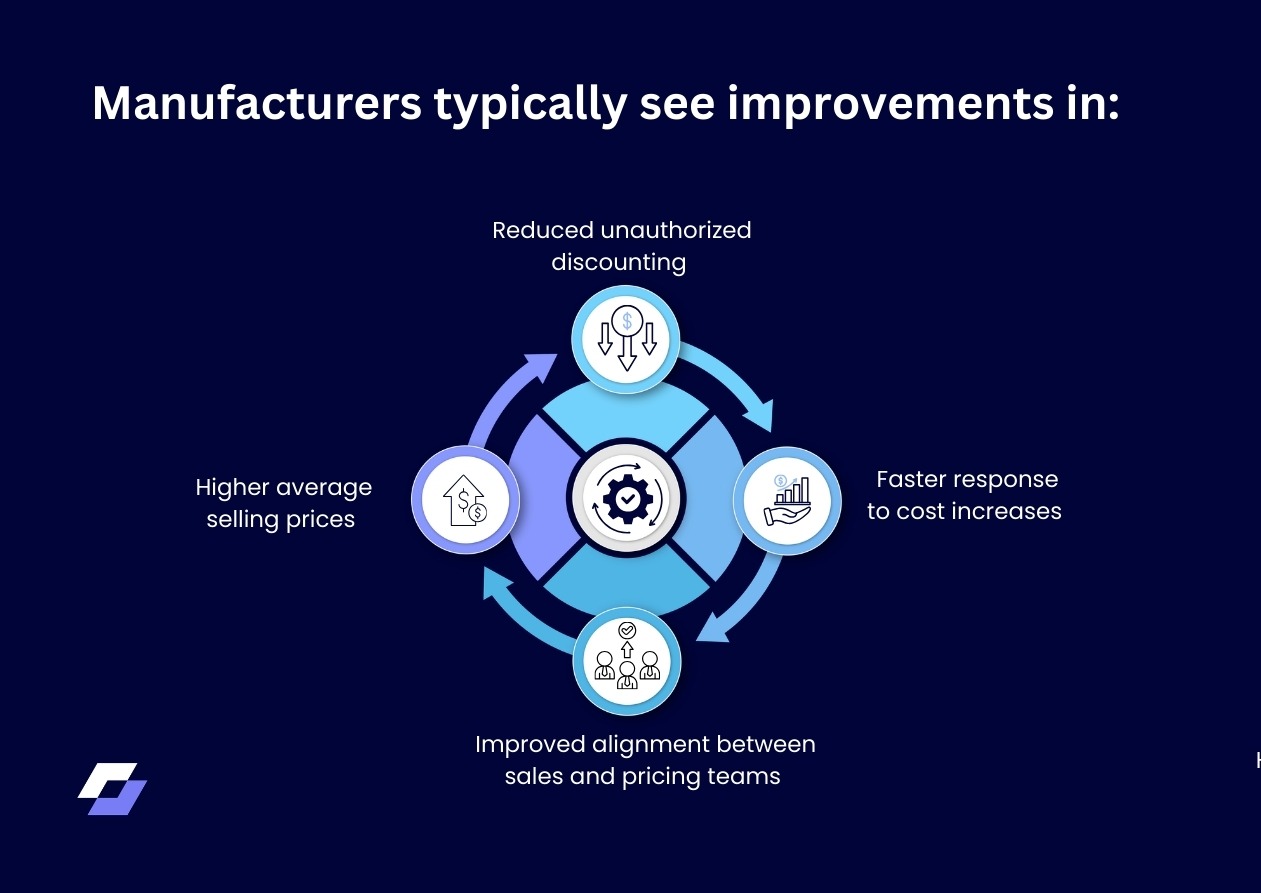
Operational efficiency also improves as manual pricing tasks decrease.
When pricing becomes data-driven, leadership gains clearer visibility into margin performance across product lines and regions.
AI and Predictive Analytics in Automotive Pricing
Modern dynamic pricing software increasingly uses AI-driven analytics to forecast demand and identify pricing opportunities.
For automotive manufacturers, predictive analytics can:
-Anticipate seasonal demand for specific parts
-Identify price elasticity across customer segments
-Forecast revenue impact before implementing changes
-Detect patterns in competitor pricing behavior
These insights allow businesses to make informed decisions rather than relying on historical assumptions.
Predictive capability strengthens long-term planning and supports sustainable growth.

Conclusion: Turn Pricing into a Strategic Automotive Advantage
In automotive manufacturing and industrial components, pricing is not just a financial decision. It is a competitive lever that influences dealer relationships, aftermarket performance, and long-term brand positioning.
Dynamic pricing software gives automotive businesses the ability to respond instantly to cost changes, competitor activity, and market demand. When combined with structured price management software and a clearly defined competitive pricing strategy, it transforms pricing from a reactive task into a growth engine.
Priceintelguru helps automotive manufacturers and industrial component suppliers implement intelligent pricing systems designed for complex, high-volume environments. With advanced analytics, automated pricing capabilities, and real-time market insights, businesses gain the clarity needed to protect margins and expand market share.
If your automotive pricing strategy still relies on static lists and manual updates, now is the time to modernize. Request a demo of Priceintelguru today and discover how dynamic pricing software can drive measurable growth and long-term profitability in your manufacturing operations.