


.png)
.png)


© 2025 PriceIntelGuru. All Rights Reserved
Industrial parts distribution has entered a new era of transparency. Buyers no longer rely solely on long-standing supplier relationships or offline catalogs. They compare specifications, availability, and pricing across distributor websites, B2B marketplaces, and global sourcing platforms in real time. In this environment, competitor price tracking is no longer optional for distributors who want to protect margins and maintain market share.
For industrial parts distributors managing thousands of SKUs across multiple manufacturers, pricing decisions directly influence revenue performance. A slight misalignment in pricing can shift volume to a competitor within days. Without structured product price tracking, distributors risk reacting too slowly to market changes.
Modern price tracking software allows distributors to monitor competitor pricing continuously, analyze trends, and make informed adjustments. Instead of relying on anecdotal sales feedback, pricing becomes guided by measurable data. This shift transforms pricing from a reactive task into a strategic capability.
The New Competitive Landscape in Industrial Distribution
Industrial parts distributors operate between manufacturers and end customers. They must balance supplier agreements, inventory turnover, and competitive positioning. Unlike manufacturers, distributors often compete directly on price for identical part numbers.
Digital marketplaces have intensified this competition. The same bearing, valve, or fastener may appear across multiple distributor platforms at slightly different prices. Buyers quickly identify discrepancies. If a distributor consistently prices above the market without a clear value advantage, conversion rates decline.
At the same time, aggressive discounting can erode already thin margins. This creates a delicate balance. Competitor price tracking provides the visibility required to manage that balance effectively.
Distributors who understand their exact market position can make confident decisions about when to match pricing, when to differentiate through service, and when to preserve margin.
What Competitor Price Tracking Means for Distributors
Competitor price tracking is the systematic monitoring of how identical or comparable products are priced by competing distributors. In industrial parts distribution, this typically involves monitoring exact manufacturer part numbers across multiple online channels.
Unlike occasional manual checks, structured price tracking uses automated tools to collect pricing data consistently. Advanced price tracking software validates product matches, tracks price movements over time, and highlights deviations that may require action.
A professional price tracking service goes beyond simple data scraping. It organizes information into dashboards and reports that support strategic decisions. Distributors can view pricing gaps by region, product category, or competitor.
The objective is not to mirror competitor pricing blindly. It is to understand market dynamics and respond strategically.
Why Product Price Tracking Is Essential for Margin Protection
Margins in industrial distribution are often influenced by volume, supplier terms, and inventory turnover. When pricing decisions are made without reliable market data, distributors risk unnecessary discounting.
Product price tracking allows teams to identify where they are priced significantly above or below competitors. If pricing is higher but sales remain stable, it may indicate strong customer loyalty or value perception. If volume declines while competitors lower prices, data provides early warning signals.
Instead of reacting only after revenue drops, distributors can adjust proactively. This protects margin while maintaining competitiveness.
Furthermore, consistent price tracking reduces internal confusion. Sales teams operate with clear awareness of market positioning, enabling stronger negotiation strategies.
The Role of Price Tracking Software in Industrial Operations
Manual competitor monitoring is time-consuming and prone to error. Industrial distributors often carry extensive catalogs with thousands of SKUs. Tracking each competitor manually is not sustainable.
Price tracking software automates this process. It continuously scans competitor websites and marketplaces, ensuring up-to-date visibility. It records historical data, enabling trend analysis rather than isolated comparisons.
Integration with internal systems enhances efficiency. When connected to ERP or pricing software platforms, insights from competitor price tracking can inform pricing rules, approval workflows, and performance dashboards.
Automation reduces administrative burden while improving decision speed. Pricing teams focus on strategy rather than data collection.
Building a Competitive Pricing Strategy with Structured Tracking
Effective pricing in industrial distribution requires more than occasional adjustments. It demands a structured strategy grounded in accurate data.
Competitor price tracking supports segmentation. High-volume products may require tighter alignment with competitor pricing to maintain visibility and share. Specialty or hard-to-source items may sustain higher margins due to limited competition.
Distributors can also identify pricing anomalies. For example, if a competitor significantly undercuts the market on a specific SKU, tracking tools highlight the discrepancy immediately. Leadership can evaluate whether to respond or maintain current positioning based on broader strategic goals.
This disciplined approach strengthens long-term competitive positioning.
Operational Advantages Beyond Price Comparison
While the primary purpose of competitor price tracking is to guide pricing decisions, the operational benefits extend further.
Sales teams gain clarity when discussing pricing with customers. Instead of relying on assumptions, they reference verified market data. Procurement teams can observe competitor trends that may signal supplier cost changes. Leadership teams gain improved visibility into regional competitiveness and margin performance.
A structured price tracking service creates shared understanding across departments. Decisions become data-driven rather than opinion-based.
This alignment improves efficiency and reduces internal friction.
Common Challenges Without Competitor Price Tracking
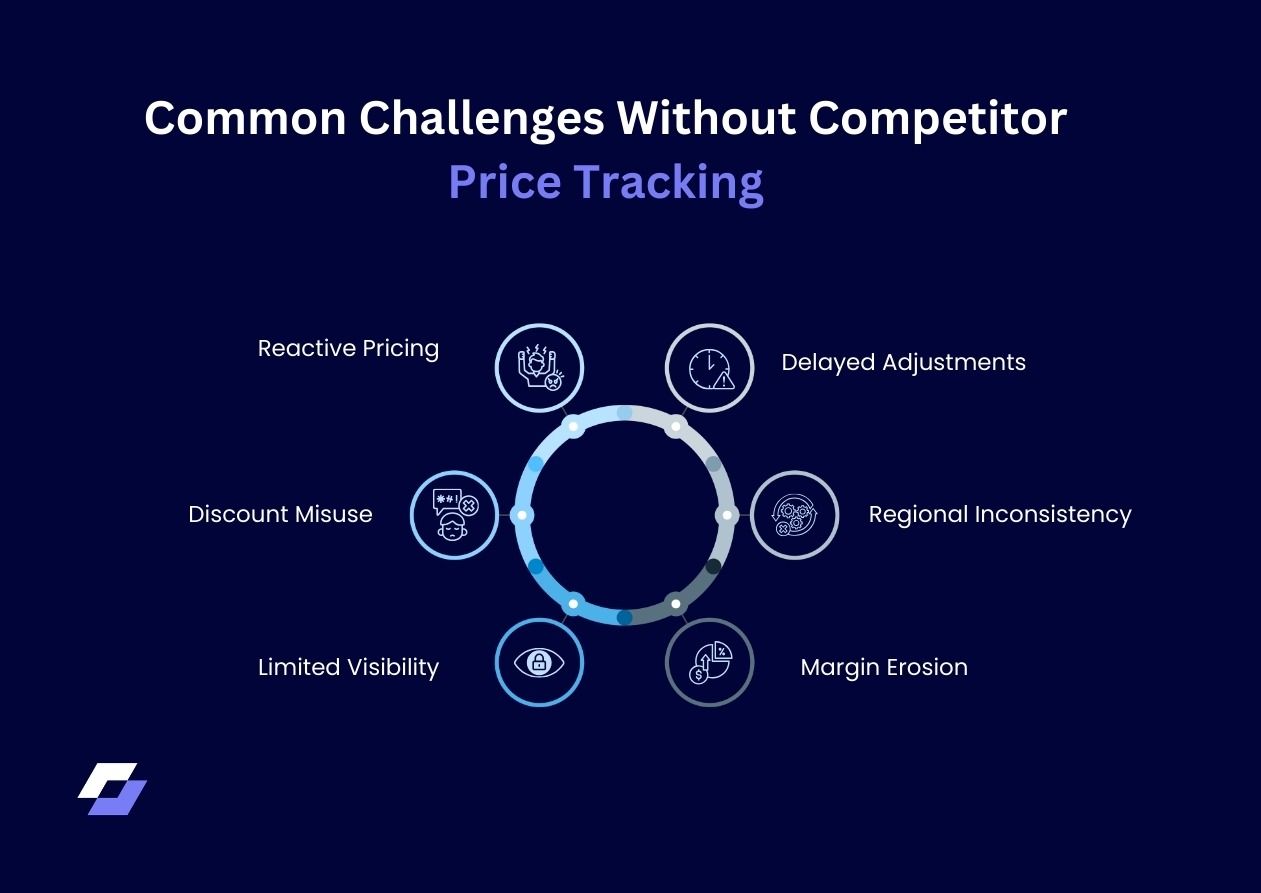
- Late pricing adjustments that allow competitors to capture market share first
- Inconsistent regional pricing due to lack of centralized visibility
- Uncontrolled discounting from sales teams without market-backed data
- Margin compression caused by reactive pricing decisions
- Limited insight into competitor positioning and market trends
- Reactive operations instead of proactive pricing leadership
Measuring ROI from Competitor Price Tracking
The financial impact of competitor price tracking becomes evident through improved margin control and stabilized revenue performance.
By identifying unnecessary discounting, distributors prevent avoidable profit erosion. By responding quickly to aggressive competitor pricing, they reduce lost sales opportunities. Even small improvements in average realized margin can generate significant annual returns across large product portfolios.
Price tracking software provides measurable metrics. Distributors can evaluate how pricing adjustments influence conversion rates, order value, and regional performance.
When integrated into broader pricing software systems, insights translate directly into operational results.
Integrating a Price Tracking Service into Daily Workflows
For competitor price tracking to deliver full value, it must be embedded into routine operations. Weekly reviews, performance dashboards, and quarterly planning sessions should incorporate tracking insights.
Successful distributors establish clear processes for responding to pricing alerts. Not every competitor change requires immediate action, but visibility ensures informed decisions.
Over time, price tracking becomes part of the organization’s culture. Teams rely on data rather than intuition when evaluating market shifts.

Conclusion
Competitor price tracking has become a strategic requirement for industrial parts distributors operating in transparent, digitally connected markets. Without structured product price tracking, distributors risk margin erosion and lost market share.
By leveraging advanced price tracking software and integrated pricing software systems, distributors gain the clarity needed to balance competitiveness with profitability. Continuous price tracking ensures informed decisions, faster response times, and stronger alignment across departments.
At Priceintelguru, we help industrial distributors transform raw competitor data into actionable pricing intelligence that drives measurable growth and margin protection.
If you are ready to strengthen your competitive position and make confident pricing decisions, schedule a personalized demo with Priceintelguru today and discover how intelligent competitor price tracking can elevate your distribution strategy.